
Qinghai Lake Cycling Guide: E-Bike and Road Bike Route Plan
Plan a Qinghai Lake cycling trip with practical e-bike and road bike route options, daily distances, altitude tips, battery advice, road conditions, safety notes, and bike choice guidance.
QINGHAI LAKE
Cyclequest China
6/19/2026
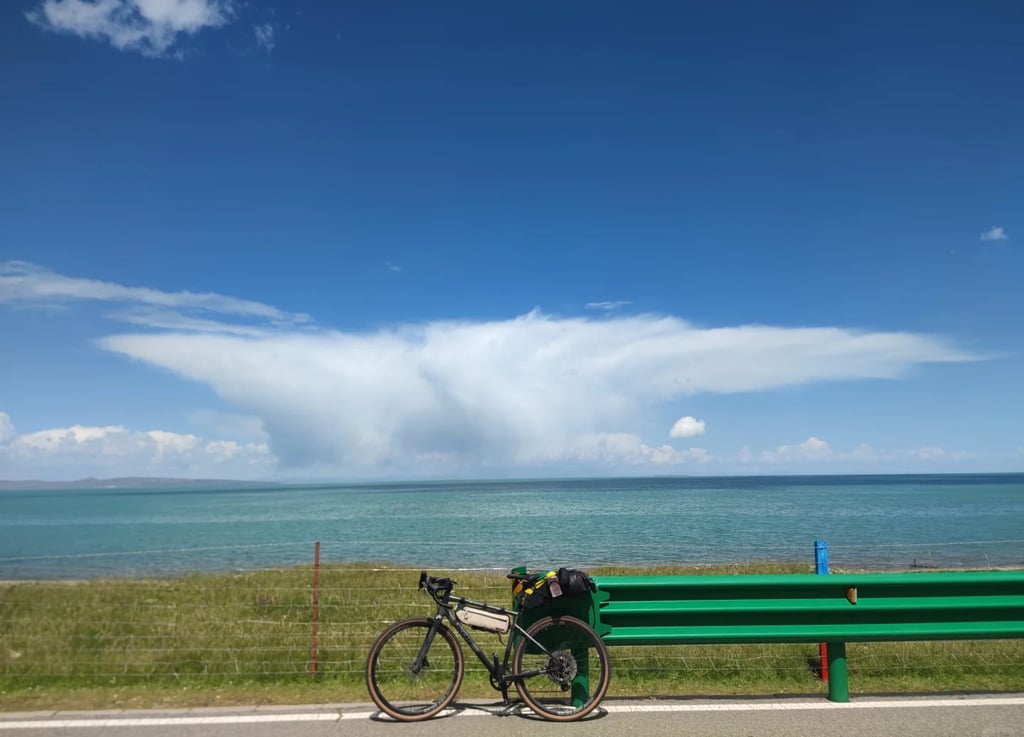
Qinghai Lake is one of China’s classic long-distance cycling routes. The standard loop is around 350–360 km, with wide plateau roads, open grasslands, lake views, Tibetan cultural landscapes, and long exposed sections where wind and altitude matter as much as distance. For riders planning a bike tour in China, Qinghai Lake is very different from lower-altitude destinations such as Guilin, Yangshuo, Dali, or Chengdu.
This guide is written as a practical planning reference, not a tour product page. It compares two common ways to ride around Qinghai Lake: an e-bike version for riders who want assistance at altitude, and a road bike version for stronger cyclists who prefer speed and efficiency.
Cycle Quest China shares this guide to help international travelers understand the route, bike choice, altitude risk, daily pacing, and preparation needed before cycling around Qinghai Lake.
Qinghai Lake Cycling Route at a Glance
Most Qinghai Lake cycling trips start and finish in Xihai Town, a common bike-rental base near the northeastern side of the lake.
The classic clockwise loop usually passes through or near:
Xihai Town → Jiangxigou / 151 Base → Heimahe → Shinaigai / Bird Island area → Gangcha County → Xihai Town
ItemPractical NotesTotal distanceAround 350–360 kmTypical duration4–5 daysAverage altitudeAround 3,200 mRoad surfaceMostly paved asphaltMain challengesAltitude, wind, long daily distances, limited supply pointsBest directionClockwise is commonly preferredBest seasonJune to SeptemberBest sceneryJuly–August, especially during rapeseed flower seasonSuitable bikesE-bike, road bike, touring bike, hybrid bike, mountain bikeDifficultyModerate to challenging, depending on fitness and weather
Although the route is not extremely technical, it should not be treated as an easy leisure ride. The altitude, wind, sun exposure, and long distances can make Qinghai Lake challenging even for riders who are comfortable cycling at lower elevations.
Part 1: Qinghai Lake by E-Bike
Is an E-Bike Suitable for Qinghai Lake?
Yes, an e-bike can be a good choice for Qinghai Lake, especially for riders who are new to high-altitude cycling. A proper e-bike provides pedal assistance only when the rider is pedaling. This helps reduce physical strain on gradual climbs, windy sections, and long plateau roads.
An e-bike is suitable for:
First-time high-altitude cyclists
Riders with average fitness
Travelers who want to enjoy the scenery without overexertion
Older riders or mixed-ability groups
People who want a more relaxed cycling experience
However, an e-bike does not remove all risk. Around Qinghai Lake, the main issue is not whether the bike can climb, but whether the battery can last through long, exposed sections.
Key E-Bike Limitations
Battery Range
Many rental e-bikes may advertise a range of around 80–130 km, but real-world range can be lower. Cold weather, headwind, rider weight, luggage, tire pressure, and high-assist mode can reduce battery life.
For planning, it is safer to assume a practical range of 50–90 km unless the rental shop can clearly confirm otherwise.
Bike Weight
E-bikes are much heavier than road bikes. Many models weigh around 22–28 kg. If the battery runs out, pedaling becomes tiring, especially at altitude.
Repair Difficulty
Basic mechanical issues may be fixable in larger towns, but battery, motor, or controller problems are difficult to repair outside Xihai Town.
Charging
Charging points are limited along some sections of the loop. Always confirm whether your accommodation allows overnight charging.
E-Bike Rental Notes
Xihai Town is the most common place to rent bikes for the Qinghai Lake loop. Some shops offer e-bikes, but quality, battery capacity, and support conditions can vary.
Before renting an e-bike, check:
Whether it is a real pedal-assist e-bike, not an electric scooter
Battery capacity and realistic range
Whether the battery is fully charged
Whether the charger and charging port work properly
Brake condition and tire condition
Whether the shop offers a spare battery or emergency contact
Whether the bike can cover your longest planned day
Rental prices change by season and bike quality. If local shops quote a low price, check the battery carefully before accepting the bike.
4-Day E-Bike Route Plan
A 4-day e-bike loop is possible, but it requires careful battery planning. For most e-bike riders, a 5-day plan is safer and more relaxed. If you choose the 4-day version, pay special attention to Day 3.
| Day | Route | Distance | Terrain | Key Reminder |
|---|---:|---|---|
| Day 1 | Xihai Town → Jiangxigou / 151 Base | ~75 km | Gradual climb and rolling road | Use low or medium assist |
| Day 2 | Jiangxigou → Heimahe | ~70 km | Gentle rolling road | Good lake-view section |
| Day 3 | Heimahe → Gangcha County | ~120 km | Mostly flat but exposed | Battery-risk day |
| Day 4 | Gangcha County → Xihai Town | ~86 km | Rolling road with final climb | Save battery for the end |
Total distance: approximately 350–360 km
Day 1: Xihai Town to Jiangxigou / 151 Base
Distance: approximately 75 km
Difficulty by e-bike: moderate
Road condition: paved road, gradual climbing after departure
Supply: possible around roadside towns and service points
The first day should be ridden slowly. Xihai Town is already at high altitude, and many riders feel short of breath on the first climb. Keep the assist mode low or medium and avoid using too much battery early in the day.
This section gives a good introduction to plateau cycling, with open roads, grassland, and lake views appearing gradually. Before checking in, confirm that your accommodation can charge the battery overnight.
Day 2: Jiangxigou to Heimahe
Distance: approximately 70 km
Difficulty by e-bike: relatively easy
Road condition: mostly paved and gently rolling
Supply: better than the west side of the lake
This is one of the more enjoyable e-bike days. The south shore of Qinghai Lake offers classic lake views, open grasslands, and seasonal rapeseed fields. In July and August, this section can be especially scenic but also busier.
Since the distance is moderate, avoid riding too fast. Save your energy and battery for the longer west-side section on Day 3. Heimahe is a common overnight stop and is known by many travelers as a sunrise-viewing area.
Day 3: Heimahe to Gangcha County
Distance: approximately 120 km
Difficulty by e-bike: challenging because of battery range
Road condition: paved, exposed, with limited supply points
Supply: limited on some west-side sections
This is the most important day for e-bike planning. The west side of Qinghai Lake is often considered one of the most beautiful parts of the loop, with wide lake views and fewer built-up areas. However, it is also the section where battery anxiety is most likely.
A 120 km day can be too long for many rental e-bikes, especially if there is headwind or cold weather. Start with a full battery, use low assist whenever possible, and carry enough water and snacks.
If you are unsure about battery range, split this section and use a 5-day route instead.
Day 4: Gangcha County to Xihai Town
Distance: approximately 86 km
Difficulty by e-bike: moderate
Road condition: paved, rolling terrain, final climb before returning
Supply: available around larger towns such as Ha’ergai and Ganzihe
The final day includes rolling roads and a climb before returning to Xihai Town. Do not use too much battery early in the day. Save enough power for the later climb and possible headwind.
After the climb, the route descends toward Xihai Town. Keep your speed controlled, especially if the road is windy or if traffic increases near town.
Safer 5-Day E-Bike Alternative
For many e-bike riders, the 5-day version is better than the 4-day version.
| Day | Route | Distance |
|---|---:|
| Day 1 | Xihai Town → Jiangxigou / 151 Base | ~75–80 km |
| Day 2 | Jiangxigou → Heimahe | ~70 km |
| Day 3 | Heimahe → Shinaigai / Bird Island area | ~60–70 km |
| Day 4 | Shinaigai / Bird Island area → Gangcha County | ~70–80 km |
| Day 5 | Gangcha County → Xihai Town | ~86 km |
This version reduces battery pressure, allows more time for rest, and gives more flexibility if the weather changes.
Part 2: Qinghai Lake by Road Bike
Is a Road Bike Suitable for Qinghai Lake?
Yes. The standard Qinghai Lake loop is mostly paved and can be suitable for road bikes. A road bike is lighter and more efficient than a mountain bike, which makes it a good choice for experienced cyclists who want to cover long distances.
A road bike is suitable for:
Riders with long-distance cycling experience
Cyclists comfortable with 80–100 km per day
People who prefer speed and efficiency
Riders using luggage transfer or a support vehicle
Cyclists who can handle punctures and basic repairs
For complete beginners, a road bike is not always the best choice. The altitude, wind, and long daily distances can cause fatigue quickly.
Road Bike Limitations
Luggage
Most road bikes are not designed for heavy panniers. Riders usually need a small bikepacking setup, light backpack, or support vehicle.
Wind
Qinghai Lake can be windy. Lightweight road bikes can be affected by strong sidewinds, especially on exposed plateau roads.
Punctures
Road-bike tires are narrow and can be harder to remove than mountain-bike tires. Carry spare tubes, tire levers, and a reliable pump.
Altitude
At around 3,200 m, your normal cycling pace may feel harder. Use easier gears and avoid riding at full effort early in the trip.
4-Day Road Bike Route Plan
For trained riders, the 4-day road bike route is a practical option. The main challenge is not technical road surface, but daily endurance, wind, and altitude recovery.
| Day | Route | Distance | Terrain | Key Reminder |
|---|---:|---|---|
| Day 1 | Xihai Town → Jiangxigou | ~100 km | Gradual climb and rolling road | Start slowly |
| Day 2 | Jiangxigou → Shinaigai / Bird Island area | ~88 km | Mostly flat or gently rolling | Good scenic section |
| Day 3 | Shinaigai → Gangcha County | ~80 km | Mostly flat but exposed | Carry enough water |
| Day 4 | Gangcha County → Xihai Town | ~86 km | Rolling road and final climb | Save energy for the return |
Total distance: approximately 350–360 km
Day 1: Xihai Town to Jiangxigou
Distance: approximately 100 km
Difficulty by road bike: moderate to challenging
Road condition: paved road, gradual climb, then rolling sections
Supply: available at some roadside towns and service areas
The first day is longer than the e-bike version. It is important not to ride too hard out of Xihai Town, because the altitude can make the first climb feel more difficult than expected.
A road bike performs well on this section, but pacing is essential. Use an easy gear, keep a steady cadence, and drink water regularly. Stay overnight around Jiangxigou to keep the 4-day route balanced.
Day 2: Jiangxigou to Shinaigai / Bird Island Area
Distance: approximately 88 km
Difficulty by road bike: moderate
Road condition: paved and generally suitable for road bikes
Supply: Heimahe is a useful rest and lunch stop
This day combines the south shore and part of the west-side route. It is one of the most scenic sections of the loop, with wide lake views, grasslands, and seasonal flower fields.
Road bikes are efficient here, especially in calm weather. If there is headwind, stay conservative and avoid spending too much energy before reaching your overnight stop.
Day 3: Shinaigai to Gangcha County
Distance: approximately 80 km
Difficulty by road bike: moderate
Road condition: paved, open, exposed
Supply: limited on some sections
This section is often one of the best road-cycling days around Qinghai Lake. The west side feels open and quiet, with broad views of the lake and fewer dense tourist areas.
The main issue is exposure. Carry enough water and snacks from the start. Wind can make the ride harder than the distance suggests. As you approach Gangcha, traffic may increase, so stay visible and ride defensively.
Day 4: Gangcha County to Xihai Town
Distance: approximately 86 km
Difficulty by road bike: moderate to challenging
Road condition: paved, rolling terrain, final climb before return
Supply: available around larger towns on the route
The final day is not the longest, but it can feel hard after three days of riding. There are rolling sections and a final climb before returning to Xihai Town.
Use low gears and keep your effort controlled. After the climb, the descent toward Xihai Town can be enjoyable on a road bike, but do not descend too fast. Strong wind, traffic, or tired hands can increase risk.
E-Bike vs Road Bike: Which One Should You Choose?
ComparisonE-BikeRoad BikePhysical demandLowerHigherBest daily distance60–80 km80–100 kmMain limitationBattery rangeRider fitnessClimbingEasier with assistanceRequires pacingBike weightHeavy, often 22–28 kgLight, often 8–12 kgLuggageEasier to carryLimited capacityRepairElectrical problems are difficultMechanical repairs are easierBest forBeginners, mixed groups, relaxed ridersExperienced cyclistsMain riskBattery failure or insufficient rangeFatigue, wind, punctures
Simple Recommendation
Choose an e-bike if you are new to plateau cycling, have average fitness, want a more relaxed ride, or are traveling with riders of different ability levels.
Choose a road bike if you have long-distance riding experience, can handle 80–100 km per day, and prefer a lighter, faster bike.
If you are unsure, the safer choice is usually an e-bike with a 5-day route, or a regular bike with luggage support.
Best Time to Cycle Around Qinghai Lake
The main cycling season is usually June to September.
June
June is cooler and usually less crowded than peak summer. It can be a good choice for riders who prefer quieter roads, but mornings and evenings may still be cold.
July and August
July and August are the most popular months. The scenery is often at its best, especially with rapeseed flowers around the lake. However, this is also the busiest period, so accommodation should be booked early.
September
September can be a good off-peak month. The weather may still be suitable, crowds are smaller, and prices may be more reasonable. Prepare for colder mornings and evenings.
Winter, early spring, and late autumn are not recommended for most recreational cyclists because of cold weather, wind, possible ice, and reduced services.
Altitude and Safety Notes
Qinghai Lake sits at around 3,200 m above sea level. Some riders may experience headache, poor sleep, shortness of breath, nausea, or unusual fatigue.
Before starting the ride:
Arrive one or two days early if possible
Avoid alcohol before and during the ride
Start slowly on Day 1
Drink water regularly
Avoid sprinting on climbs
Stop riding if altitude symptoms become serious
Keep warm clothing easy to access
Check weather and wind before departure
The route is not technically difficult, but altitude can turn a normal cycling day into a hard one. Respect your body and adjust the plan when needed.
Food, Water, and Accommodation
Food and accommodation are easier to find in Xihai Town, Jiangxigou, Heimahe, and Gangcha. Some west-side sections have fewer reliable supply points, so riders should carry more water and snacks than they expect to need.
Recommended daily supplies:
1.5–2 liters of water
Energy bars, nuts, dried fruit, or chocolate
Electrolytes
Windproof jacket
Sunscreen
Phone power bank
Offline map
During July and August, book accommodation in advance, especially around popular lake-view stops.
Do You Need a Support Vehicle?
A support vehicle is not required for every rider, but it is useful for Qinghai Lake because of altitude, wind, long distances, and limited services.
A support vehicle can help with:
Luggage transfer
Emergency pickup
Bike breakdowns
Extra water and food
E-bike battery backup
Altitude-related fatigue
Bad weather
Independent riders can complete the loop without support, but they should be comfortable with navigation, repairs, and self-management on exposed roads.
Cycle Quest China generally recommends judging support needs based on rider fitness, bike type, weather, luggage, and altitude experience, rather than only looking at distance.
Responsible Cycling Around Qinghai Lake
Qinghai Lake is not only a scenic route. It is also a culturally important area with Tibetan communities, religious sites, grasslands, wetlands, and wildlife habitats.
Ride responsibly:
Do not enter fenced grasslands without permission
Do not disturb livestock or wildlife
Do not leave trash on the roadside
Respect monasteries and local customs
Ask before photographing local people
Stay on existing roads and paths
Avoid riding into wetlands or protected areas
Clockwise riding is commonly preferred around sacred Tibetan landscapes. Even if you are not religious, following this direction can make the ride more culturally respectful.
FAQ: Qinghai Lake Cycling
How many days do you need to cycle around Qinghai Lake?
Most riders need 4 to 5 days. A 4-day route is suitable for fit road-bike riders or well-prepared e-bike riders. A 5-day route is better for e-bikes, beginners, and riders who want more time for rest and scenery.
Is an e-bike suitable for cycling around Qinghai Lake?
Yes, an e-bike is suitable, especially for riders who are new to high-altitude cycling. The main issue is battery range, so check the real range of the bike and confirm charging options before departure.
Can an e-bike battery last for the full Qinghai Lake route?
One battery will not last the full loop. You need to charge every night. Some daily sections, especially the Heimahe to Gangcha section, may be too long for many rental e-bikes unless the bike has strong range or a spare battery.
Is a road bike a good choice for Qinghai Lake?
Yes, a road bike is a good choice for experienced cyclists because the standard route is mostly paved. However, road-bike riders should be ready for altitude, wind, punctures, and limited luggage capacity.
Which part of Qinghai Lake is the most scenic for cycling?
Many riders consider the west side, especially the route between Heimahe, Shinaigai, Bird Island area, and Gangcha, to be the most scenic. It has open lake views, fewer built-up areas, and a stronger sense of plateau space.
Is Qinghai Lake cycling difficult because of climbing?
The route is not extremely mountainous, but altitude and wind make it harder. Even gentle climbs can feel tiring at around 3,200 m. The final return section toward Xihai Town can also feel demanding after several days of riding.
What is the best month for Qinghai Lake cycling?
July and August usually offer the most colorful scenery, especially during rapeseed flower season, but they are also the busiest months. June and September can be better for riders who prefer fewer crowds.
Do beginners need a support vehicle?
Beginners should strongly consider a support vehicle, especially if they are riding at altitude for the first time. It helps with luggage, bike problems, bad weather, altitude discomfort, and emergency pickup.
Should I choose an e-bike or a road bike for Qinghai Lake?
Choose an e-bike if you want a more relaxed ride or are worried about altitude. Choose a road bike if you have long-distance cycling experience and want a faster, lighter ride. For many first-time visitors, an e-bike with a 5-day plan is the safer option.
Can Cycle Quest China help with Qinghai Lake route planning?
Cycle Quest China provides practical cycling information for international travelers in China. For Qinghai Lake, the most important planning points are bike choice, altitude adaptation, daily distance, charging access, luggage strategy, and backup options.
Sitemap
Phone
+86 18310259331
© 2003 - 2026 CycleQuest China All rights reserved ! Terms | Privacy Policy