
Yunnan’s Eternal Mythical Paradise
Where snow-capped peaks pierce the heavens, Shangri-La offers an otherworldly escape into the heart of Yunnan’s wild frontier. Wander through the ancient, cobblestone streets of Dukezong, hear the rhythmic chants echoing within Songzanlin Monastery, and lose yourself in pristine alpine valleys. Here, ancient Tibetan myths breathe and untamed nature truly thrives.
DISCOVER TIBET
China
/ Beijing
6 days
/ 5 nights
Maximum Group Size
/ 12
Activity Level
/ 4 Stars
DAY 1 / Yunnan / Lijiang
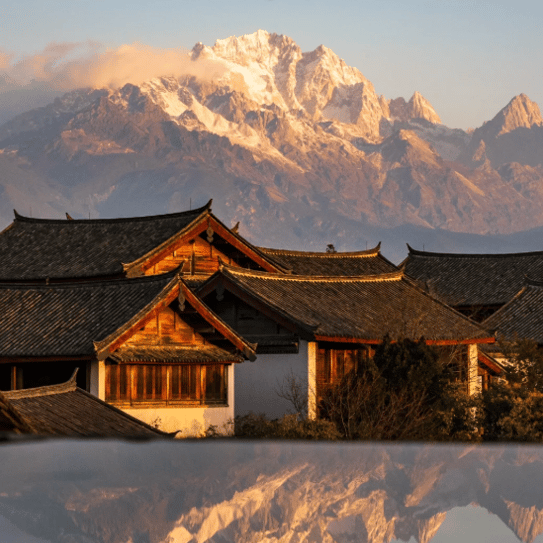
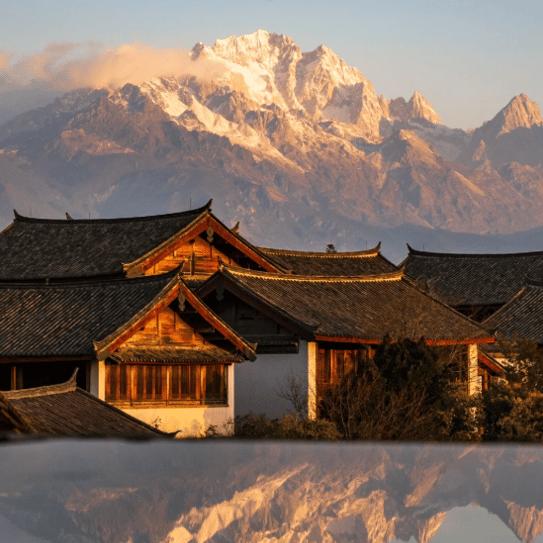
Nestled in southwest China, Yunnan is a land of stunning diversity—snow-capped peaks, subtropical forests, and vibrant ethnic cultures. Within this province lies Lijiang, a town that feels like a living painting. Its UNESCO-listed Old Town, with cobbled lanes, ancient canals, and wooden bridges, echoes the heritage of the Naxi people, who still preserve their unique Dongba script. Towering above is the Jade Dragon Snow Mountain, a sacred peak that never fails to inspire awe. Whether wandering through tranquil Black Dragon Pool or savoring local tea, Lijiang offers an unforgettable blend of nature and tradition. It’s a place where time slows down, inviting every traveler into its timeless charm.
Saddle-View Highlights
Sifang Square
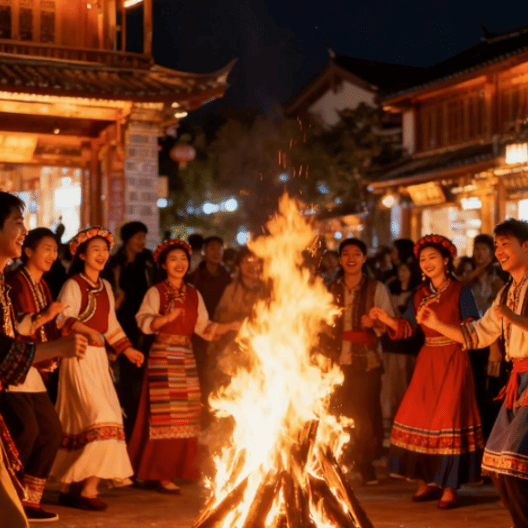
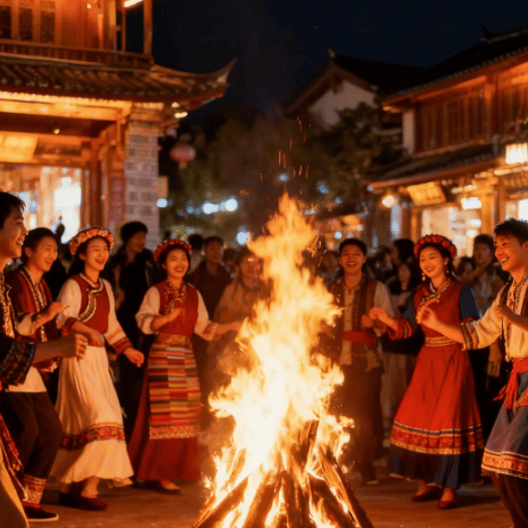
At the very core of Lijiang’s Dayan Ancient Town lies Sifang Square – a small yet pulsating heart that has beaten for centuries. Built during the Ming Dynasty, its unique shape resembles a noble’s seal, symbolizing authority and prosperity. Historically, Sifang Square was the bustling crossroads of the Ancient Tea Horse Road, where merchants from Yunnan, Tibet, and Sichuan gathered to trade tea, horses, and silk. Today, the square remains Lijiang’s vibrant center.
Radiating lanes lead visitors into a maze of traditional Naxi courtyards, craft shops, and cozy cafés. In the evening, watch as local Naxi women, dressed in traditional "pǐjié" (waist aprons), gather to perform lively folk dances under the stars.
Dayan Ancient Town
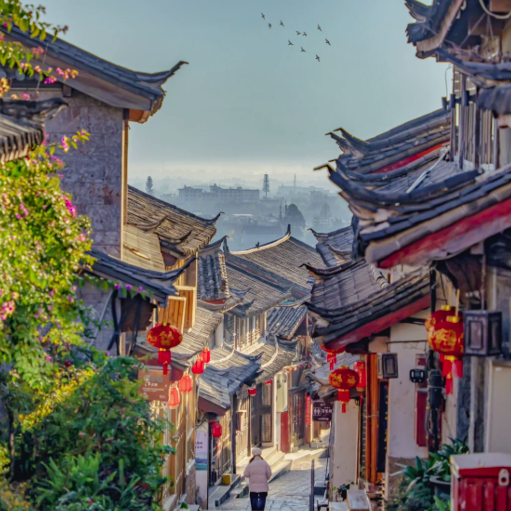
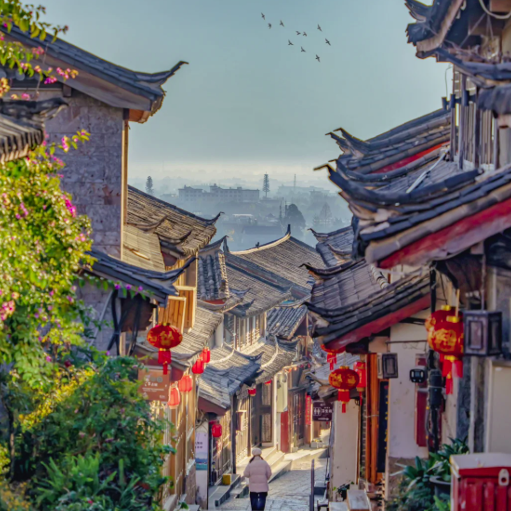
Yunnan’s Lijiang, the Dayan Ancient Town is a UNESCO World Heritage gem. With its winding cobblestone lanes, graceful stone bridges, and intricate water channels fed by the Jade Dragon Snow Mountain, the town feels like a living watercolor. Once a key stop on the Ancient Tea Horse Road, Dayan preserves the rich heritage of the Naxi people.
At its heart lies Sifang Square, a bustling hub where traders once gathered. Whether exploring traditional courtyards or listening to ancient Naxi music, visitors find themselves transported back in time, immersed in timeless beauty.
Naxi courtyard
The traditional Naxi courtyard is a tranquil world unto itself. Built around a central patio, these compact homes follow strict feng shui principles, often featuring exquisitely carved wooden doors, painted beams, and lush potted plants. A typical courtyard houses an entire Naxi family, with grandparents, parents, and children sharing harmonious space. Notice the unique “four-into-five” layout and the symbolic “heavenly sky well” that collects rainwater. Life here is slow and intimate—sipping butter tea, drying herbs under the sun, or listening to the trickle of an internal canal. Many courtyards now welcome guests as cozy inns, offering a chance to wake up to rooster crows and mountain views.
Lion Hill Lijiang landmark
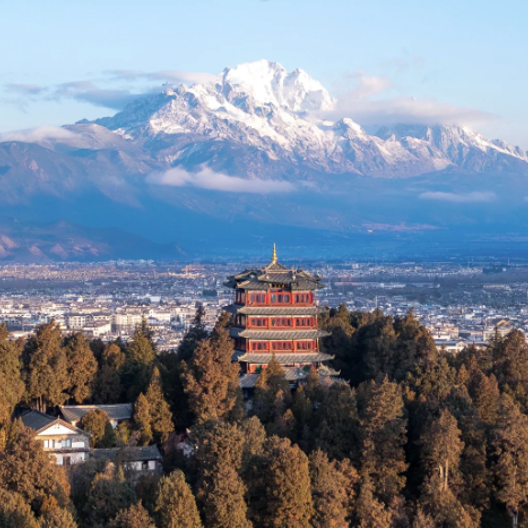
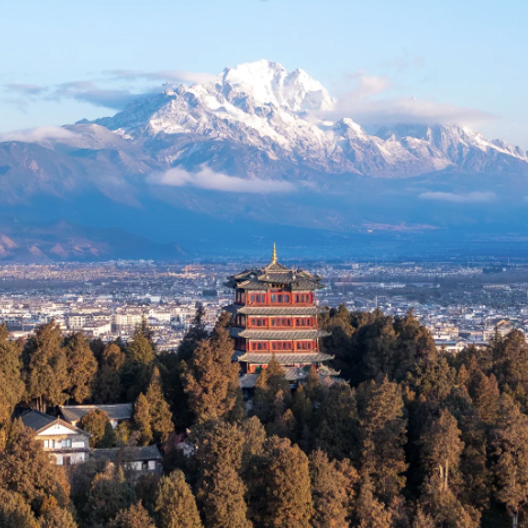
Perched atop Lion Hill, Wangu Tower is Lijiang’s iconic landmark and the ancient town’s highest vantage point. This magnificent five-story, five-eaved wooden pavilion, built in 1997, showcases traditional Chinese architecture with 16 colossal timber pillars that run straight through all levels—a unique "pillar-through-the-roof" design. Rising 33 meters, it symbolizes the 330,000 people of the former Naxi Autonomous County. The climb is rewarded with breathtaking 360-degree views: to the north, the Jade Dragon Snow Mountain, and to the east, the labyrinth of ancient Naxi rooftops and canals. Its name, from the Naxi word "Wengu," fittingly means "on the hilltop".
Special experience / culture events
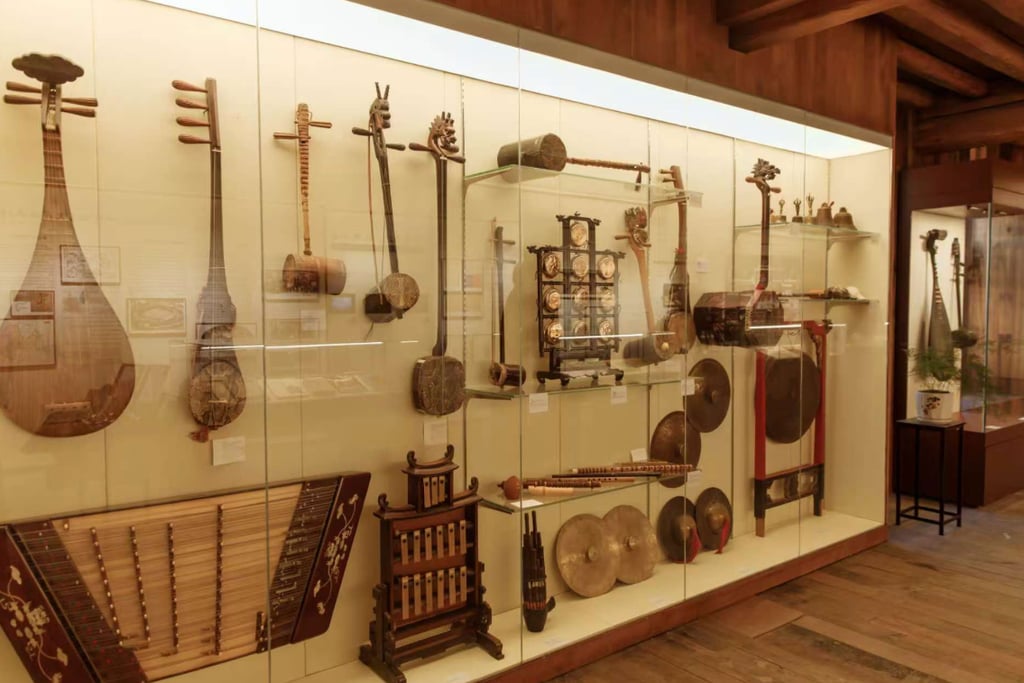
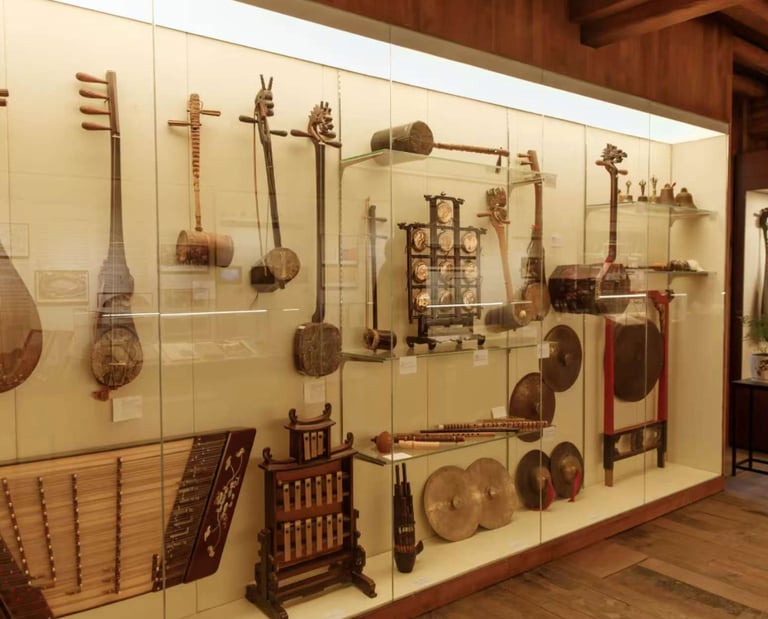
Xuan Ke’s Naxi Ancient Music
The Living Fossil of Chinese Music
Xuan Ke's Naxi Ancient Music is a legendary cultural performance in Lijiang's Old Town, hailed as a "living fossil of music". Revived by the charismatic ethnomusicologist Xuan Ke after 1981, the nightly concert features elderly Naxi masters playing 600-year-old melodies on rare ancient instruments. It’s celebrated for its "three treasures": ancient tunes,
ancient instruments, and aged musicians, making it an unforgettable encounter.
Url Link: https://www.trip.com/travel-guide/attraction/lijiang/dayan-naxi-ancient-music-performance-10758827/
Local Cuisine Recommendations
Lijiang Fangma Firepit Restaurant
Fangma Firepit Restaurant delivers an unforgettable dining experience rooted in the traditional Chinese “huotang” (fire pit). The name “Fangma” conjures images of horses grazing peacefully in Yunnan’s highland pastures, perfectly reflecting the restaurant’s rustic, unhurried spirit.
Gathered around a crackling open fire, guests share wooden benches and watch as meats slow-roast on spits and earthenware pots simmer gently with aromatic broths. The menu celebrates authentic Naxi cuisine: locally raised chicken, wild mushrooms, root vegetables, and handmade tofu, all infused with the smoky depth only an open flame can provide. Meals unfold unhurriedly—dipping tender morsels into spicy or herbal sauces, sipping warm barley wine, and letting conversation drift as embers glow.
Beyond the food, Fangma embodies Naxi hospitality. The staff often share stories of Lijiang’s Tea Horse Road heritage, and the wooden dining hall, lit by lanterns and firelight, feels like a welcoming village home. Here, strangers become tablemates, and a simple supper transforms into a cultural journey. For travelers seeking authenticity, Fangma Firepit Restaurant is not just a meal—it’s the warm, smoky heart of old-town Lijiang.
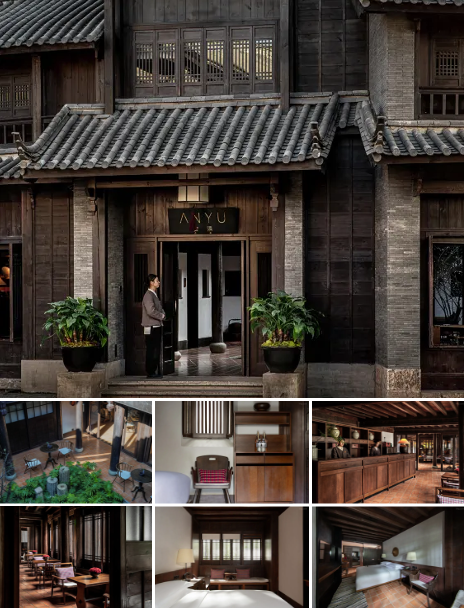
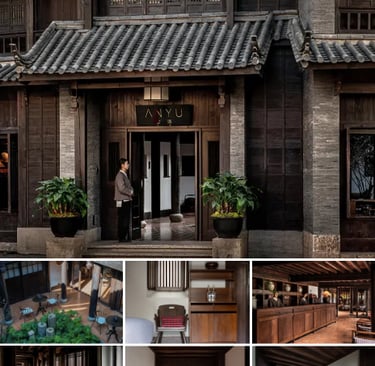
Lijiang Old Town Anyu Hotel
(also referred to as ANYU Hotel – Lijiang Old Town)
Nestled in a quiet corner of Lijiang’s ancient Dayan Town, Lijiang Old Town Anyu Hotel offers a serene retreat just steps from the UNESCO World Heritage Site’s vibrant core. Located at No. 52 Yigu Alley, South Gate Street, the hotel places guests within an 8-10 minute stroll to the bustling Sifang Square, while remaining tucked away from the bar street noise for a truly peaceful stay.
The property is masterfully converted from a century-old Naxi residential compound, preserving the traditional “one entrance, two courtyards” layout characteristic of local architecture.
Its low-profile, deep-wood aesthetic exudes understated elegance, with custom-made wooden furniture, intricate Dongba-inspired carvings, and handpicked Southeast Asian artifacts enriching its tranquil ambiance. Despite its intimate scale of 30 rooms, the hotel spares no modern comfort: each guestroom features underfloor heating, a dedicated oxygen-enrichment system to counter the 2,400-meter altitude, premium King Koil mattresses, and Le Labo toiletries.
Beyond the accommodations, service is the hotel’s true hallmark.
A dedicated 24-hour butler team delivers thoughtful touches, from curated afternoon tea in the courtyard to complimentary laundry and airport transfers. Whether savoring Naxi-inspired breakfasts featuring sea cucumber millet porridge, exploring the ancient town’s hidden lanes, or simply sipping Pu’er in the tea room, guests are invited to slow down and embrace the timeless charm of Lijiang through an authentic Naxi cultural lens.
URL LINK: https://www.trip.com/hotels/lijiang-hotel-detail-2116335/anyu-hotel-lijiang-old-town/
DAY 2 / Lijiang → The First Bend of the Yangtze River
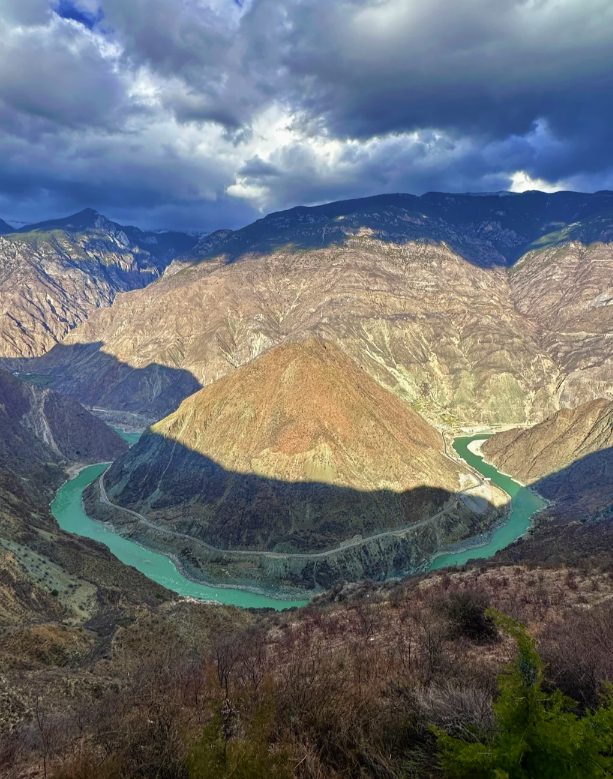
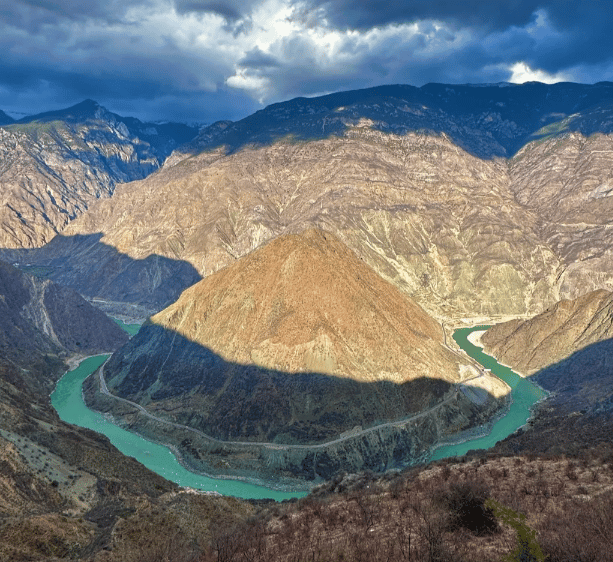
Situated between Shigu Town in Lijiang and Shasongbi Village in Shangri-La of northwest Yunnan, the First Bend of the Yangtze River is one of nature's most spectacular wonders. As the mighty Yangtze surges down from the Qinghai-Tibet Plateau, it flows south alongside the Lancang and Nujiang rivers through the deep gorges of the Hengduan Mountains in a grand "Three Parallel Rivers" formation. But upon reaching Shigu, the river meets a geological barrier that forces a dramatic transformation: it suddenly veers northeast in a near-180-degree V-shaped turn—creating the iconic "First Bend of the Yangtze River".
Total Ride Distance 52km . Total Elevation Gain 310m . Estimated Timeline 3hr
Saddle-View Highlights


Xionggu Observation Deck
Escape the tourist crowds and discover the Jinbao River, a tranquil tributary that offers the most authentic slice of rural life in Yangshuo. As you cycle along its peaceful banks, the scenery shifts from grand peaks to intimate details: ancient stone bridges, water buffalo grazing in lush rice paddies, and quiet villages where time stands still. The water here is crystal clear, mirroring the bamboo groves and distant mountains. This is a route for the soul—a gentle, rhythmic ride through the untouched heart of the countryside.
The First Bend of the Yangtze River
The river doesn't flow here—it explodes. At Shanghutiao, the narrowest section of Tiger Leaping Gorge, the entire Jinsha River is forced through a throat barely 30 meters wide. Water detonates against the Tiger Leaping Rock, sending spray thirty meters skyward. The roar hits you before the view does: a deep, chest-rattling thunder that never stops. Mist clings to the wooden walkway as you edge closer, watching whitewater hurl itself at ancient stone. This is raw, untamed nature—no peace, no postcard beauty. Just the terrifying, magnificent fury of a river that refuses to be tamed.
Naxi ancient villages
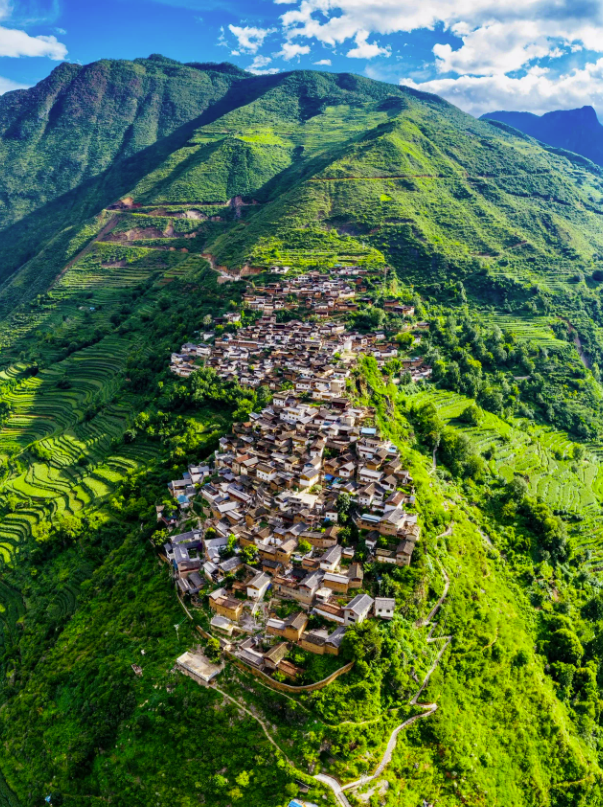
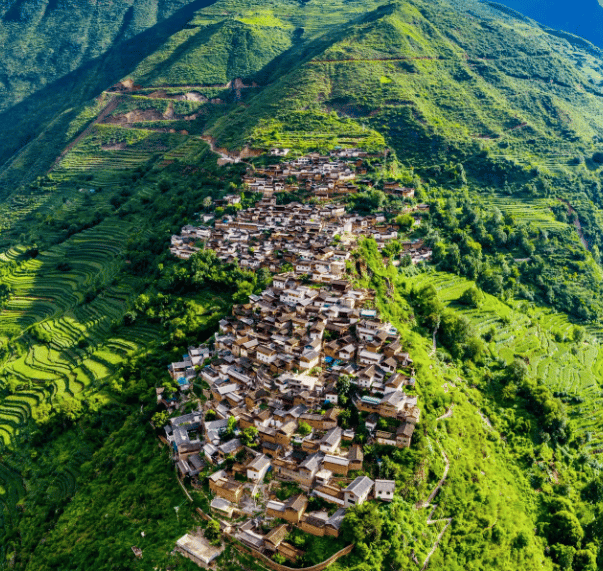
The scenic route from the First Bend of the Yangtze to Lijiang, the ancient Naxi villages offer a tranquil escape into living heritage. Clustered beneath Jade Dragon Snow Mountain and beside the Jinsha River, settlements like Yuhu, Wumu, and Baoshan Stone Fortress preserve traditional stone houses, terraced fields, and centuries-old customs. Here, you can witness the unique Dongba culture, listen to echoes of the Tea Horse Trail, and experience a slower rhythm of life. Far from tourist crowds, these villages invite mindful exploration—walking ancient cobblestone paths, learning local crafts, and sharing tea with warm-hearted Naxi people in a landscape of timeless beauty.
Shigu Town
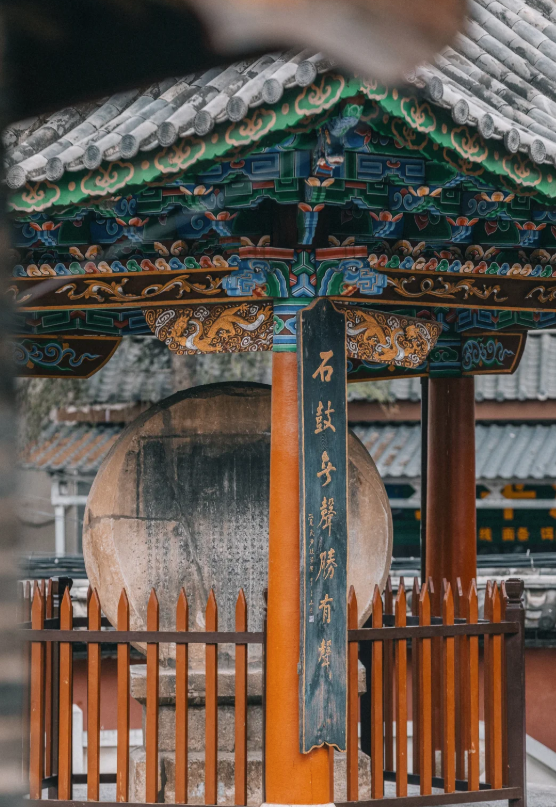
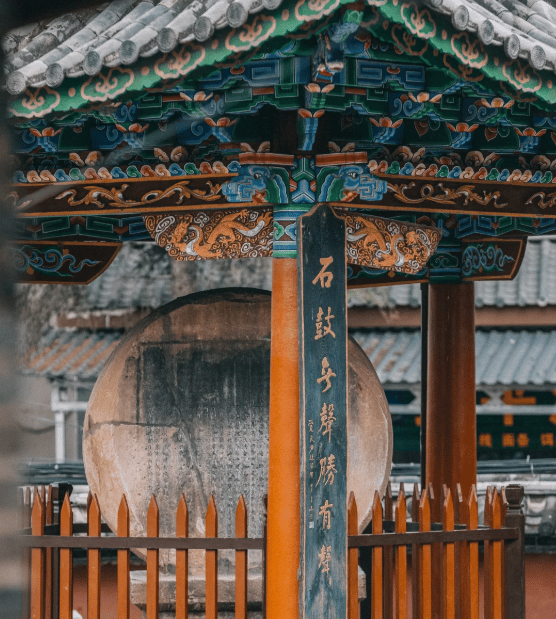
Nestled along the Jinsha River roughly an hour's drive west of Lijiang Old Town, Shigu Town (Stone Drum Town) takes its name from a white marble drum-shaped monument dating back to the mid-16th century, which commemorates a Naxi victory over an invading Tibetan army. The town's true highlight is the breathtaking First Bend of the Yangtze River, where the river dramatically reverses course, carving a stunning "V" shape through the rugged landscape. Historically, this natural corridor served as a vital hub on the Ancient Tea Horse Road and witnessed the Red Army's historic crossing during the Long March in 1936.
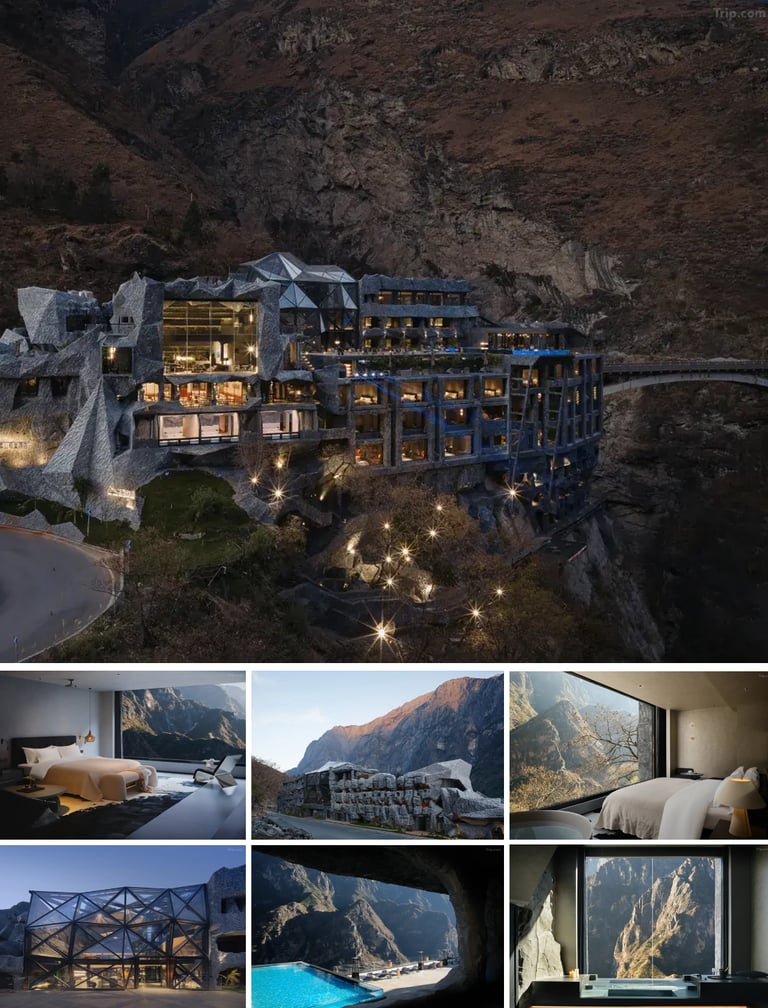
MoYe | Snow Mountain Cliff Hotel
(Shangri-La Tiger Leaping Gorge)
Perched at 1,860 meters on the sheer cliffs of Shangri-La’s Tiger Leaping Gorge, MoYe Snow Mountain Cliff Hotel is a breathtaking retreat that redefines alpine luxury. From its dramatic vantage point, the hotel commands sweeping views of two majestic peaks—Jade Dragon Snow Mountain and Haba Snow Mountain—as well as the thunderous Jinsha River Canyon far below.
The hotel’s design marries rugged cave-inspired aesthetics with contemporary comfort. Exposed stone, warm wood, and organic curves create a sense of shelter carved into the mountain itself, while floor-to-ceiling windows in every room invite the boundless landscape indoors. Each guest room is a private sanctuary, complete with a luxurious soaking tub positioned to capture the unfolding panorama—whether cloaked in sunrise gold or draped in starry silence.
For adventure travelers, MoYe is an ideal base. The legendary Tiger Leaping Gorge hiking trails are easily accessible from the property, allowing trekkers to explore one of the world’s deepest river canyons before returning to refined comforts. After a day on the trails, guests can unwind in the cliffside infinity pool, where the water seems to spill directly into the gorge, or relax at the picturesque cliffside café with a warm drink and uninterrupted mountain views.
Balancing raw nature with thoughtful hospitality, MoYe Snow Mountain Cliff Hotel offers more than accommodation—it offers an immersive encounter with Yunnan’s most awe-inspiring scenery. Whether you seek adrenaline on the trails, tranquility in a hot soak, or simply a front-row seat to the drama of snow-capped peaks and roaring rapids, this cliffside haven promises an unforgettable stay. It is not just a place to rest, but a destination that stays with you long after you leave the gorge.
URL LINK: https://www.trip.com/w/rWJvkJQQ2V2
DAY 3 / / Lijiang → Shanghutiao Gorge
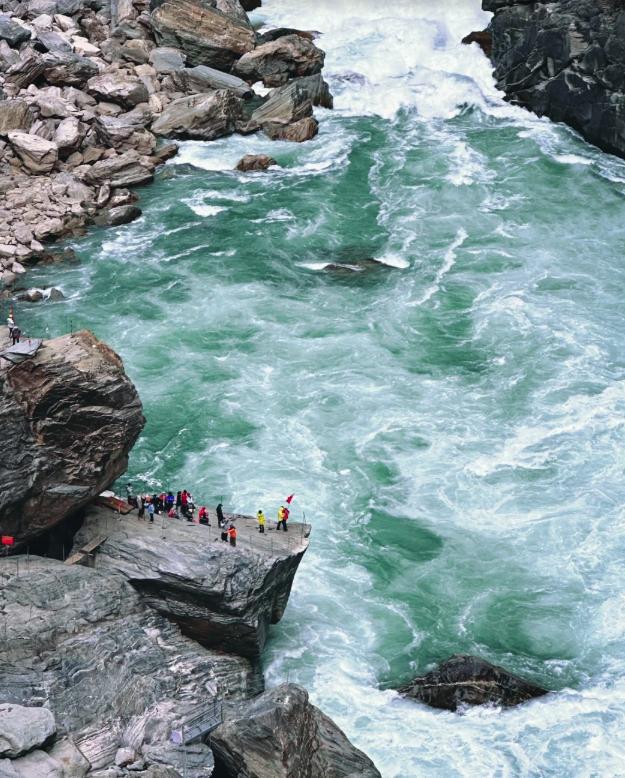
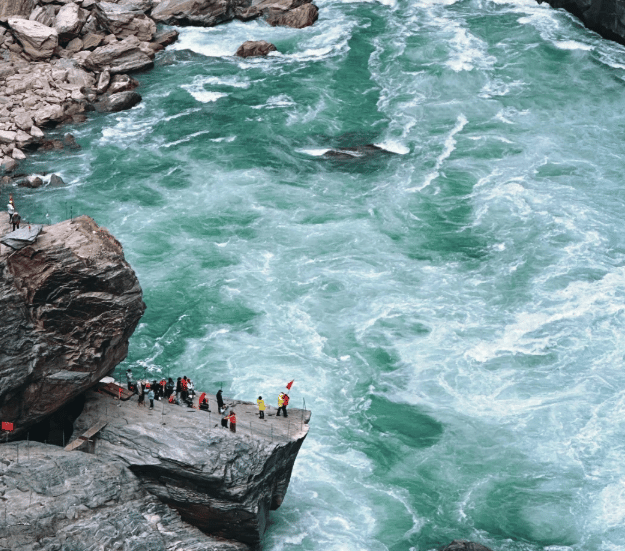
Nestled between the towering 5,596-meter Yulong Snow Mountain and 5,386-meter Haba Snow Mountain, Shanghutiao Gorge (Upper Tiger Leaping Gorge) is the narrowest and most accessible section of the world-famous Tiger Leaping Gorge, one of the world's deepest canyons. Here, the mighty Jinsha River is forced through a channel just 20 to 30 meters wide, crashing against the legendary 13-meter Tiger Leaping Rock at its center. According to legend, a hunted tiger once used this very stone to leap across the gorge to safety, giving the canyon its name. From the well-developed walking path and viewing platform (1,800m elevation), visitors can safely witness the river's thunderous roar and witness the awe-inspiring struggle between stone and torrent that has made Shanghutiao a must-see natural wonder of Yunnan.
Hotel to Starting point Hotel – 50 KM – 51 min ride
Total Ride Distance 60km . Total Elevation Gain 980m . Estimated Timeline 4hr
Saddle-View Highlights
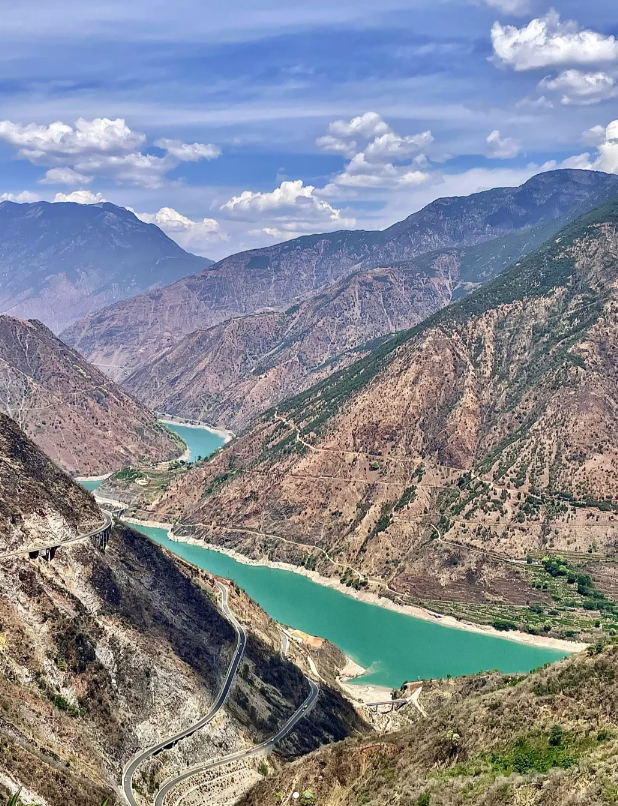
Jinsha River Canyon
Escape the tourist crowds and discover the Jinbao River, a tranquil tributary that offers the most authentic slice of rural life in Yangshuo. As you cycle along its peaceful banks, the scenery shifts from grand peaks to intimate details: ancient stone bridges, water buffalo grazing in lush rice paddies, and quiet villages where time stands still. The water here is crystal clear, mirroring the bamboo groves and distant mountains. This is a route for the soul—a gentle, rhythmic ride through the untouched heart of the countryside.
Tiger Leaping Gorge
The river doesn't flow here—it explodes. At Shanghutiao, the narrowest section of Tiger Leaping Gorge, the entire Jinsha River is forced through a throat barely 30 meters wide. Water detonates against the Tiger Leaping Rock, sending spray thirty meters skyward. The roar hits you before the view does: a deep, chest-rattling thunder that never stops. Mist clings to the wooden walkway as you edge closer, watching whitewater hurl itself at ancient stone. This is raw, untamed nature—no peace, no postcard beauty. Just the terrifying, magnificent fury of a river that refuses to be tamed.
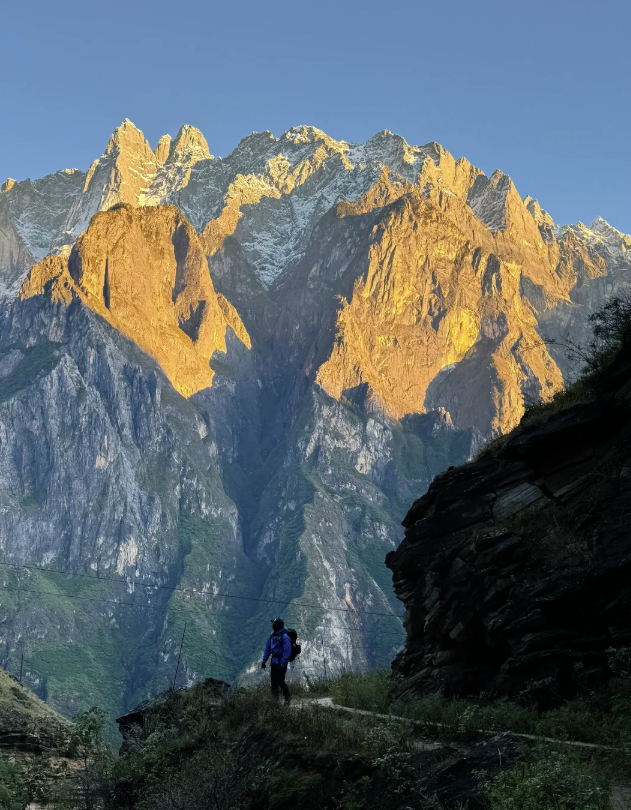
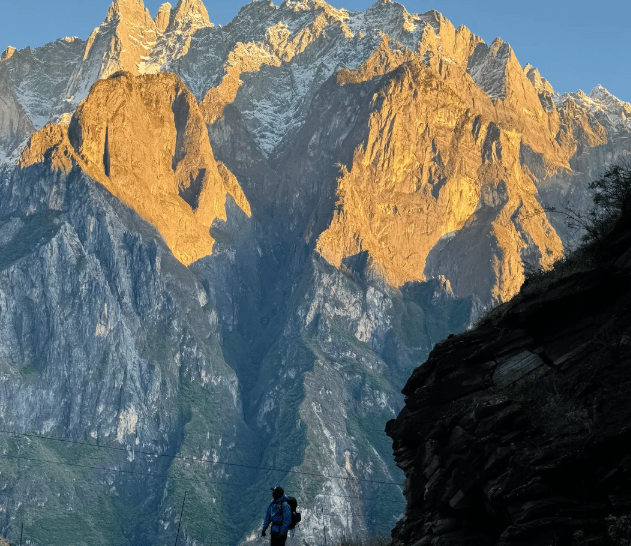
Tiger Leaping Gorge Hike
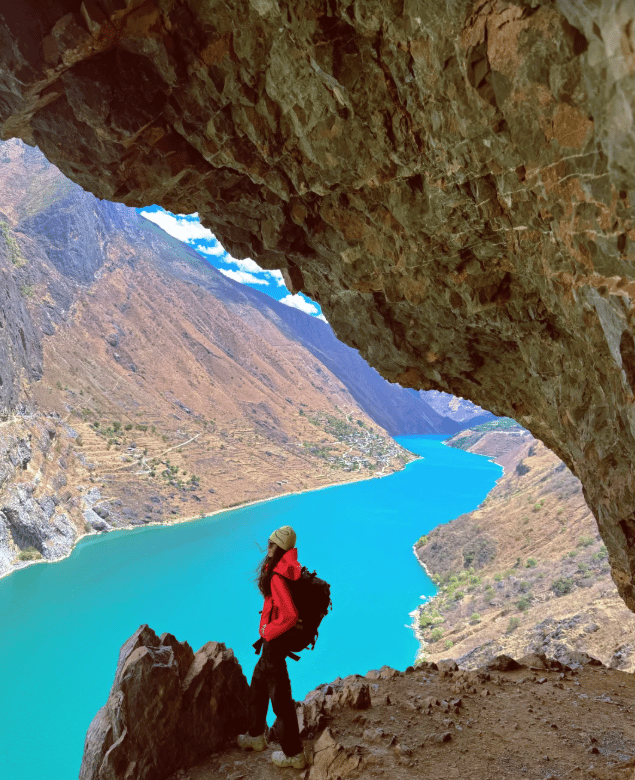
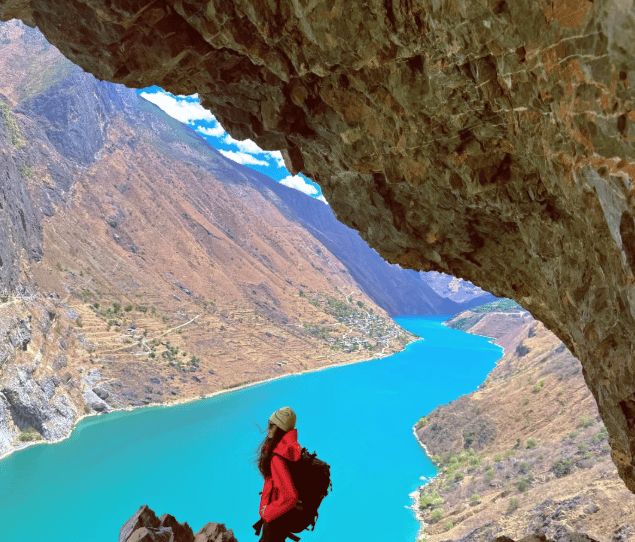
The Jinsha River Canyon hike offers a raw, exhilarating trek through one of China’s most dramatic natural corridors. Following the upper reaches of the Yangtze River—known locally as the Jinsha (“Golden Sand”)—this trail carves through the Hengduan Mountains, where the river has spent millennia slicing deep gorges between Yulong Snow Mountain and Haba Snow Mountain.
Unlike the crowded viewing platforms of Tiger Leaping Gorge, the more remote sections of the Jinsha River Canyon reward hikers with solitude, rugged beauty, and the constant rumble of rushing water far below.
Yulong & Haba Snow Mountain Gorge
Carved by the surging Jinsha River, the Yulong & Haba Snow Mountain Gorge is one of the world’s most staggering natural formations. Here, two of the highest peaks in northwest Yunnan—Yulong Snow Mountain (5,596 m) and Haba Snow Mountain (5,386 m)—stand face to face across a chasm so narrow that at its tightest point, the river is forced through a channel barely 30 meters wide. This is the very heart of Tiger Leaping Gorge, but naming it after the two guardian mountains honors the geological scale of the spectacle.
Special experience / culture events
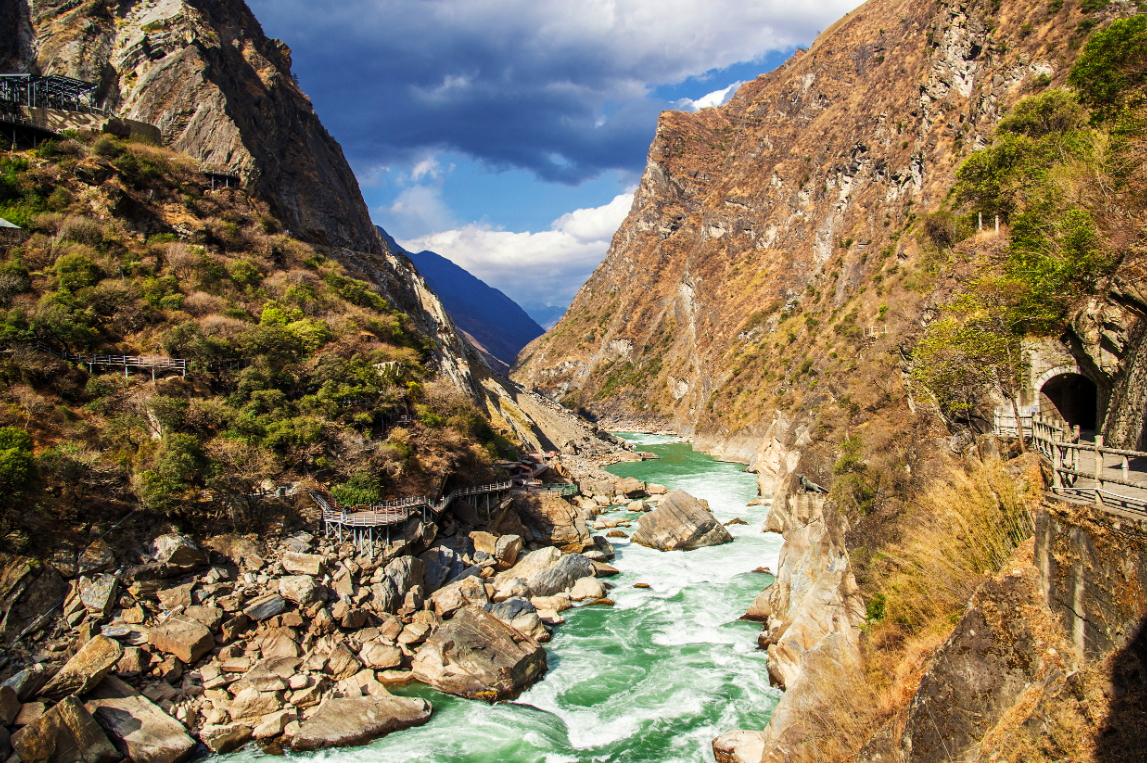
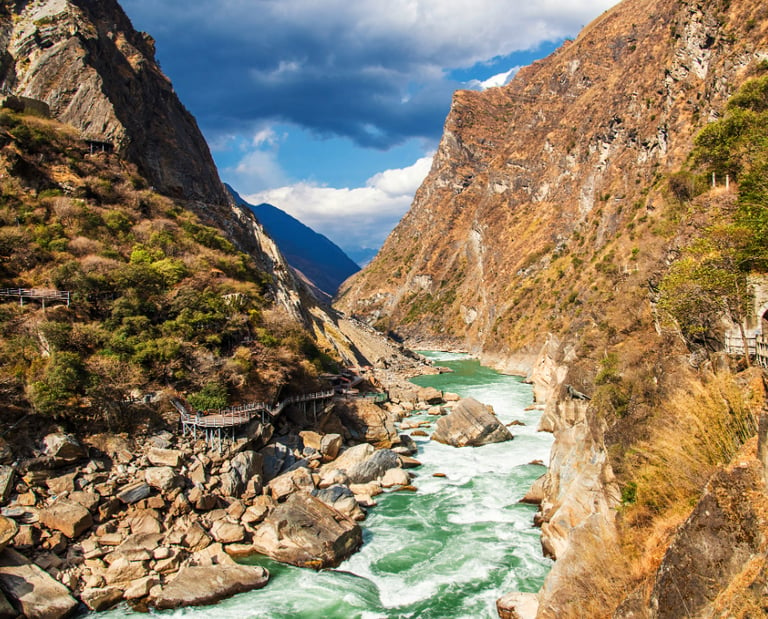
Tiger Leaping Gorge
– One of the World's Deepest Canyons
Tiger Leaping Gorge, located between Lijiang and Shangri-La in Yunnan, is one of the deepest and most spectacular river canyons in the world, carved by the roaring Jinsha River between the 5,596m Jade Dragon Snow Mountain and the 5,386m Haba Snow Mountain. The Shangri-La section of the gorge is divided into three distinct parts: Upper, Middle, and Lower Tiger Leaping Gorge, spanning approximately 20 kilometers. The river narrows to just 20–30 meters at its tightest point, creating thunderous white water rapids as it thunders through the sheer, towering cliffs. The legendary "Tiger Leaping Stone" stands near the entrance, said to be the spot where a hunted tiger once leaped across the gorge to escape. A world-renowned hiking destination for outdoor enthusiasts, the Upper Gorge is accessible to all with paved plank roads leading to breathtaking viewpoints, while the Middle and Lower sections offer thrilling multi-day treks for seasoned adventurers. The entrance ticket is RMB 45, with operating hours from 8:30 AM to 5:30 PM. Often described by the National Geographic as one of the "world's ten classic hiking routes," this majestic natural wonder promises an unforgettable journey into the heart of Yunnan's most dramatic landscapes.
📎 Trip.com Page Link: https://www.trip.com/travel-guide/attraction/shangri-la/shangri-la-tiger-leaping-gorge-10558694/
Local Cuisine Recommendations
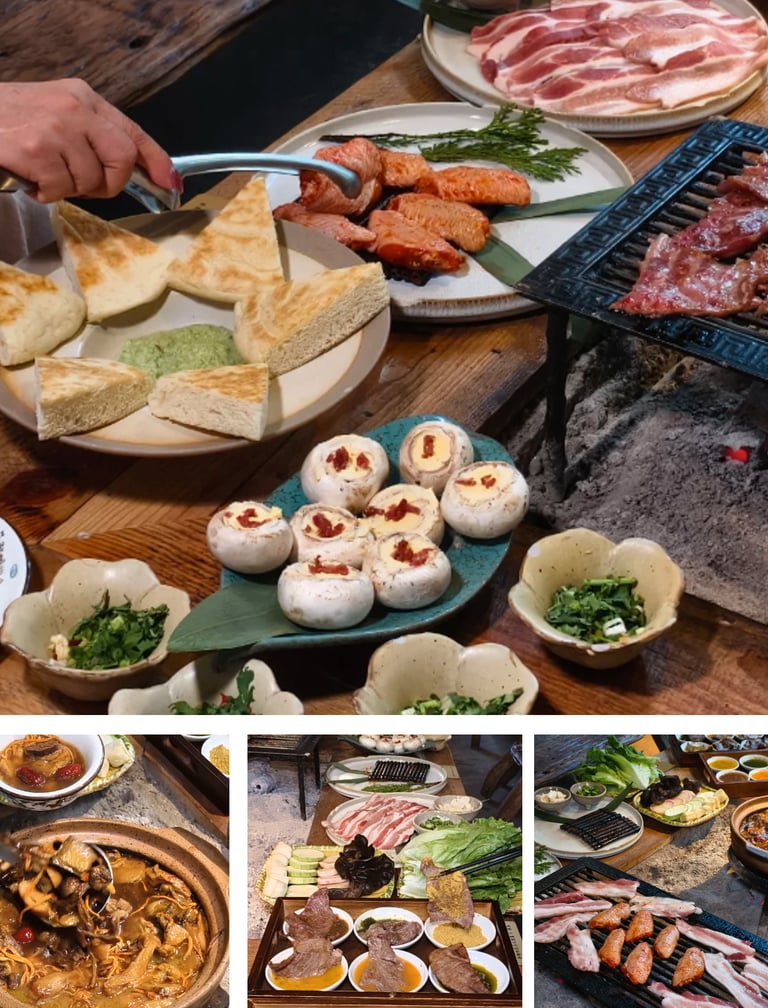
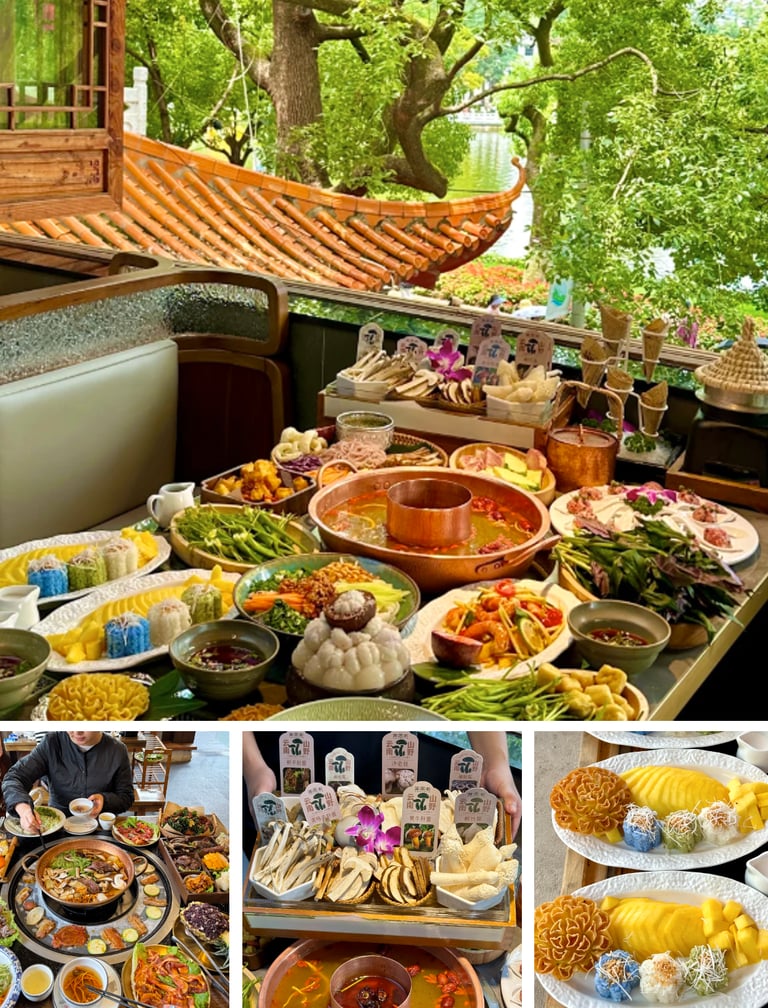
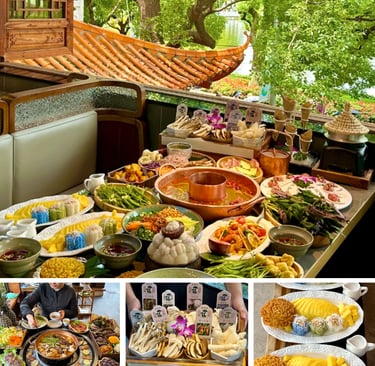
Yunnan Tripe & Wild Mushroom Hot Pot
Yunnan Tripe & Wild Mushroom Hot Pot is a signature dish from China’s southwestern province, renowned for its diverse mushrooms and bold flavors. This hearty hot pot combines tender slices of beef or pork tripe with a seasonal medley of Yunnan’s prized wild fungi – such as porcini, goat’s ear, and matsutake – simmered in a fragrant, herb-laced broth. The tripe provides a satisfying chew, while the mushrooms release an earthy, umami-rich essence that deepens as the pot bubbles gently over a charcoal flame.
Often cooked at the table, this communal dish celebrates Yunnan’s culinary philosophy of fresh, foraged ingredients and is traditionally served with a tangy dipping sauce made of chili, cilantro, and fermented bean curd. The preparation is a ritual in itself: the broth, infused with goji berries, ginger, and local spices, is first brought to a rolling boil. Then the wild mushrooms are added – never to be rushed, as some varieties require thorough cooking. Only afterward do the tripe slices go in, blanched just long enough to retain their signature crunch.
Perfect for cooler evenings, it’s a warm, nourishing feast that showcases the region’s natural bounty. Diners are encouraged to sip the broth between bites, savoring how the mushrooms’ forest-like aroma mingles with the tripe’s mild offal sweetness. More than a meal, this hot pot tells the story of Yunnan’s misty highlands, where foragers rise at dawn to gather fungi, and where every spoonful connects you to the land. It’s an experience best shared slowly, with good company and a bowl of fragrant rice on the side.
MoYe | Snow Mountain Cliff Hotel
(Shangri-La Tiger Leaping Gorge)
Perched at 1,860 meters on the sheer cliffs of Shangri-La’s Tiger Leaping Gorge, MoYe Snow Mountain Cliff Hotel is a breathtaking retreat that redefines alpine luxury. From its dramatic vantage point, the hotel commands sweeping views of two majestic peaks—Jade Dragon Snow Mountain and Haba Snow Mountain—as well as the thunderous Jinsha River Canyon far below.
The hotel’s design marries rugged cave-inspired aesthetics with contemporary comfort. Exposed stone, warm wood, and organic curves create a sense of shelter carved into the mountain itself, while floor-to-ceiling windows in every room invite the boundless landscape indoors. Each guest room is a private sanctuary, complete with a luxurious soaking tub positioned to capture the unfolding panorama—whether cloaked in sunrise gold or draped in starry silence.
For adventure travelers, MoYe is an ideal base. The legendary Tiger Leaping Gorge hiking trails are easily accessible from the property, allowing trekkers to explore one of the world’s deepest river canyons before returning to refined comforts. After a day on the trails, guests can unwind in the cliffside infinity pool, where the water seems to spill directly into the gorge, or relax at the picturesque cliffside café with a warm drink and uninterrupted mountain views.
Balancing raw nature with thoughtful hospitality, MoYe Snow Mountain Cliff Hotel offers more than accommodation—it offers an immersive encounter with Yunnan’s most awe-inspiring scenery. Whether you seek adrenaline on the trails, tranquility in a hot soak, or simply a front-row seat to the drama of snow-capped peaks and roaring rapids, this cliffside haven promises an unforgettable stay. It is not just a place to rest, but a destination that stays with you long after you leave the gorge.
URL LINK: https://www.trip.com/w/rWJvkJQQ2V2
DAY 4 / Tiger Leaping Gorge → Xiaozhongdian → Shangri-La
Perched at 3,300 meters on the southeastern edge of the Tibetan Plateau, Shangri-La is a name borrowed from James Hilton’s 1933 novel Lost Horizon—a fictional utopia of eternal peace. But in northwest Yunnan, this highland city feels uncannily real. Here, prayer flags flutter against sapphire skies, yak bells echo through pine-scented valleys, and the massive Songzanlin Monastery—often called the “Little Potala Palace”—houses hundreds of robed monks spinning golden prayer wheels. Beyond the town, alpine meadows stretch toward snow-capped peaks, where nomadic herders still pitch black yak-hair tents. Pudacuo National Park protects pristine lakes and wetlands, while Dukezong, one of China’s oldest Tibetan towns, preserves cobbled lanes and white pagodas. Whether you seek spiritual refuge, trekking adventures, or simply a moment of stillness above the clouds, Shangri-La lives up to its legendary name.
Total Ride Distance 56km . Total Elevation Gain 980m . Estimated Timeline 3hr
Saddle-View Highlights
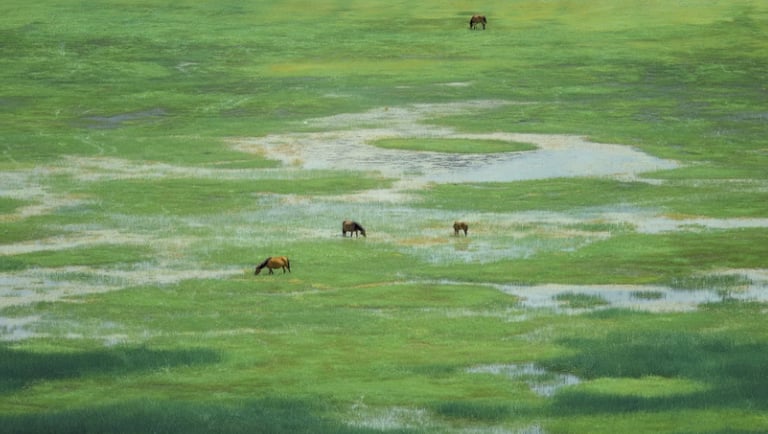
Alpine Lakes (Gaoshan Haizi)
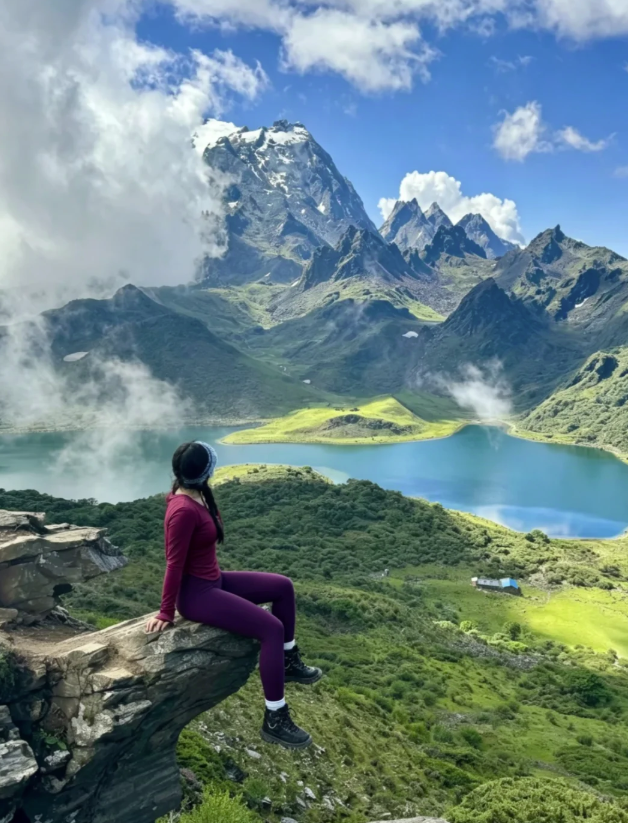
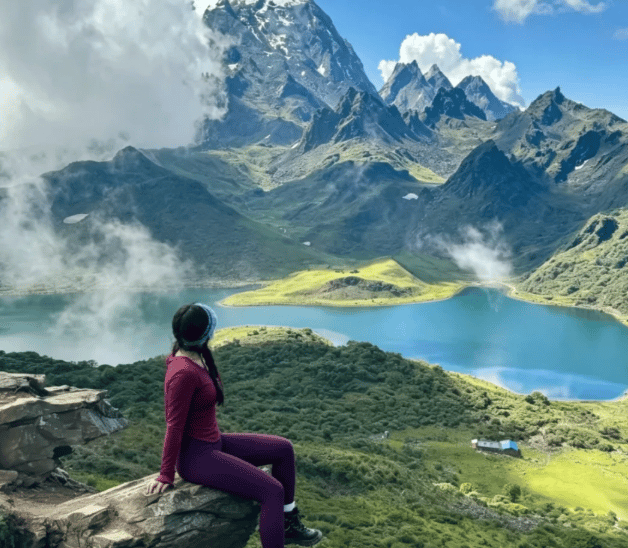
Scattered across the high mountains of northwest Yunnan, the "Haizi" – alpine lakes – are nature’s sapphires. Formed by ancient glacial melt, these crystal-clear pools nestle among rocky peaks, rhododendron thickets, and lush pastures. In Shangri-La, lakes like Bitahai and Shudu Lake mirror the sky with such purity that locals believe they are sacred eyes of the earth.
Each season paints a new masterpiece: spring azaleas bloom along the shores, summer brings emerald reflections, autumn sets golden forests ablaze, and winter freezes the surface into a shimmering mirror. Many Haizi remain untouched, accessible only by gentle hiking trails where yaks graze and prayer flags flutter.
Xiaozhongdian Grassland
Shangri-La and Lijiang, Xiaozhongdian Grassland is a serene highland pasture that feels like a hidden gem. At an altitude of over 3,200 meters, this vast meadow is framed by rolling hills and grazing yaks. Spring and summer bring a carpet of wildflowers—purple azaleas, yellow buttercups, and crimson rhododendrons—while autumn paints the grassland in gold and copper hues, attracting Tibetan herders with their black tents and smoke from burning incense.
Unlike crowded tourist spots, Xiaozhongdian offers quiet walking paths, horse rides, and chances to experience traditional Tibetan nomadic life. It's also a gateway to seasonal wetlands where rare black-necked cranes visit. Whether you seek breathtaking photography or cultural immersion, this grassland embodies the untouched charm of northwest Yunnan.
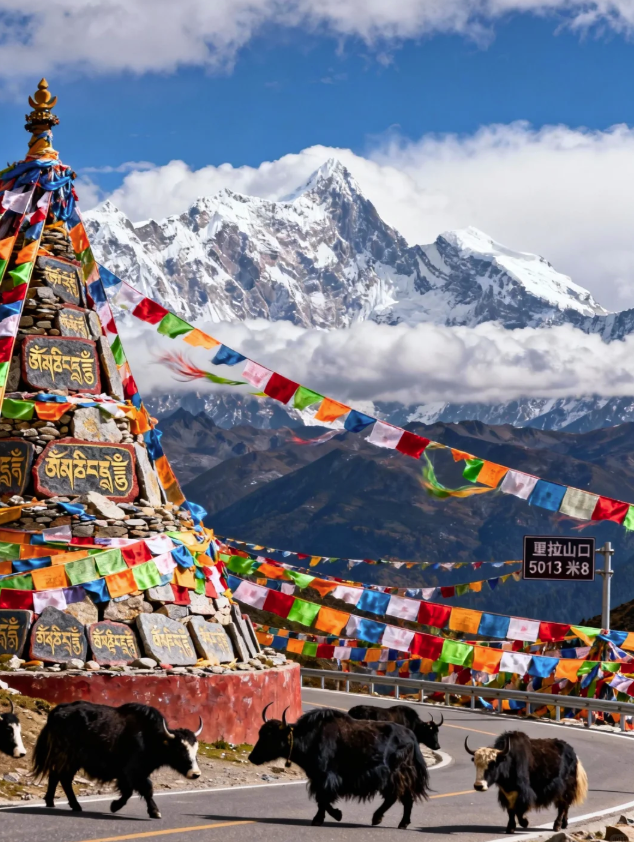
Five-Colored Prayer Flags
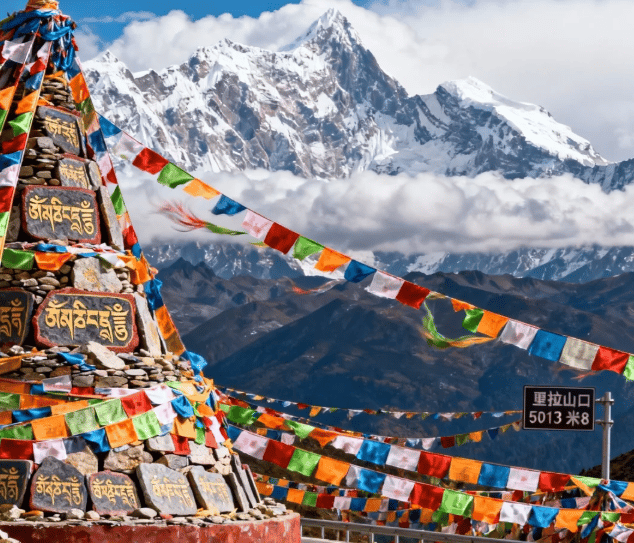
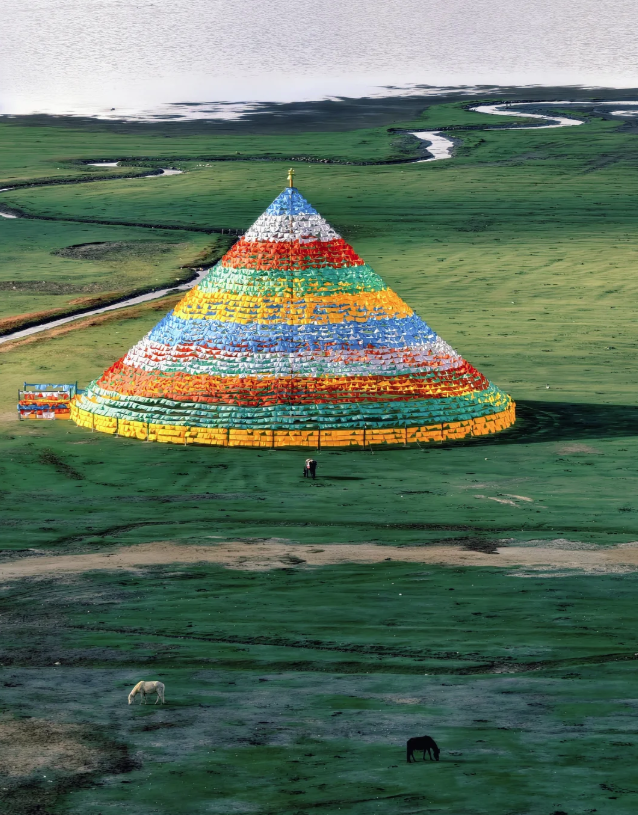
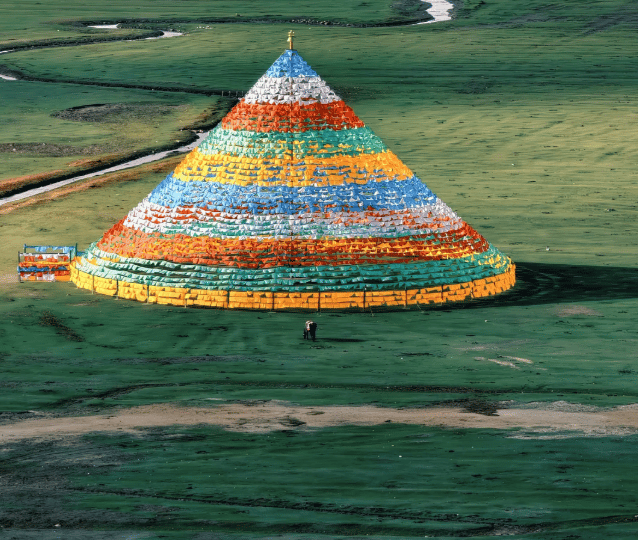
The Five-Colored Prayer Flags, known as Lungta (Wind Horse) in Tibetan Buddhism, are a common spiritual sight across the Himalayas and Tibetan-influenced regions such as northwest Yunnan (Shangri-La). Strung along mountain passes, bridges, and rooftops, each flag bears sacred mantras and symbols. The five colors appear in a fixed order: blue (sky), white (air/wind), red (fire), green (water), and yellow (earth). This sequence represents the five elements that sustain the universe.
Tibetan Buddhists believe that as the wind passes through the flags, it carries the blessings and prayers printed on them to all sentient beings, promoting peace, compassion, strength, and wisdom.
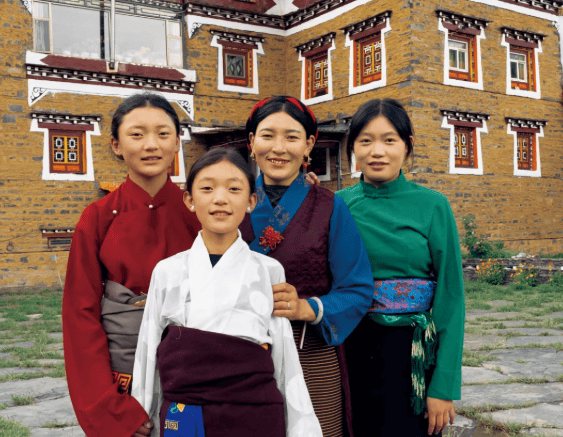
Tibetan & Qiang Heritage Village
In the Aba Tibetan and Qiang Autonomous Prefecture of Sichuan Province, Taoping Qiang Village is a living testament to over 2,000 years of ethnic heritage. This ancient settlement features 98 interconnected stone houses and two nine-story watchtowers, forming a labyrinthine fortress that has survived earthquakes and wars. Hidden beneath lies an ingenious underground water system, while white stones on rooftops symbolize the Qiang people‘s spiritual beliefs. Known as a "living museum," Taoping offers a glimpse into traditional Qiang life—from weaving and embroidery to unique culinary customs. Despite modern tourism, the village retains its authentic charm, with many residents still practicing age-old rituals.
Local Cuisine Recommendations
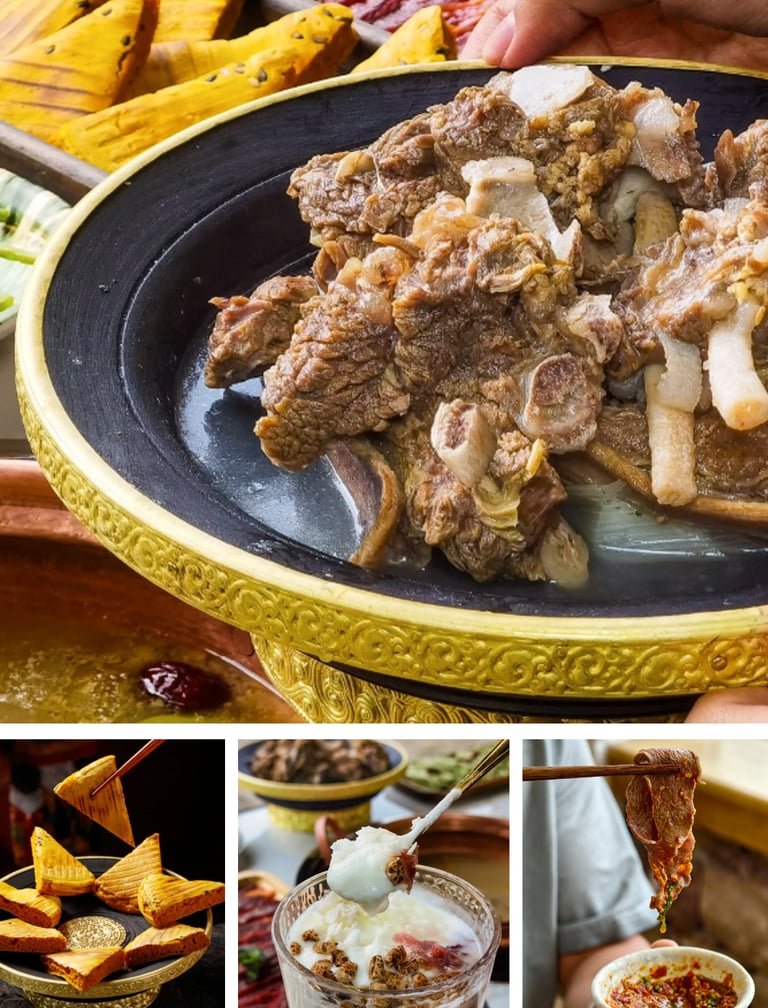
Sanggu Intangible Cultural Heritage Yak Meat
Sanggu Intangible Cultural Heritage Yak Meat originates from the high-altitude grasslands of northwestern Yunnan Province, in the region of Diqing Tibetan Autonomous Prefecture – home to the legendary “Shangri-La.” Here, yaks have been raised for centuries by Tibetan herders in an ecosystem free from pollution, grazing on natural pastures and wild medicinal herbs such as fritillary bulb and cordyceps, which impart a uniquely pure and flavorful taste to the meat.
What makes Sanggu yak meat truly special is its preservation method, recognized as an intangible cultural heritage. The meat is traditionally air-dried and lightly smoked over juniper wood, then aged for months in the crisp, thin mountain air. This process concentrates the flavors without overpowering the natural sweetness. When served, the yak meat is often sliced paper-thin, revealing a deep maroon color marbled with delicate fat. Each bite offers a chewy, savory richness that melts slowly on the tongue, leaving hints of wild herbs and a subtle smokiness.
For the best experience, enjoy it as part of a Tibetan banquet: paired with butter tea, tsampa (roasted barley flour), and a dipping sauce of chili and Sichuan pepper. Locals also recommend simmering the meat in a hearty stew with potatoes and turnips, or grilling thin slices over a charcoal fire until the edges crisp. Whether you are trekking through the Hengduan Mountains or exploring Lijiang’s old town, Sanggu yak meat is a taste of Tibetan heritage you won’t forget. It is not merely food – it is a story of nomadic resilience and the pristine landscapes of Shangri-La.
Special experience / culture events
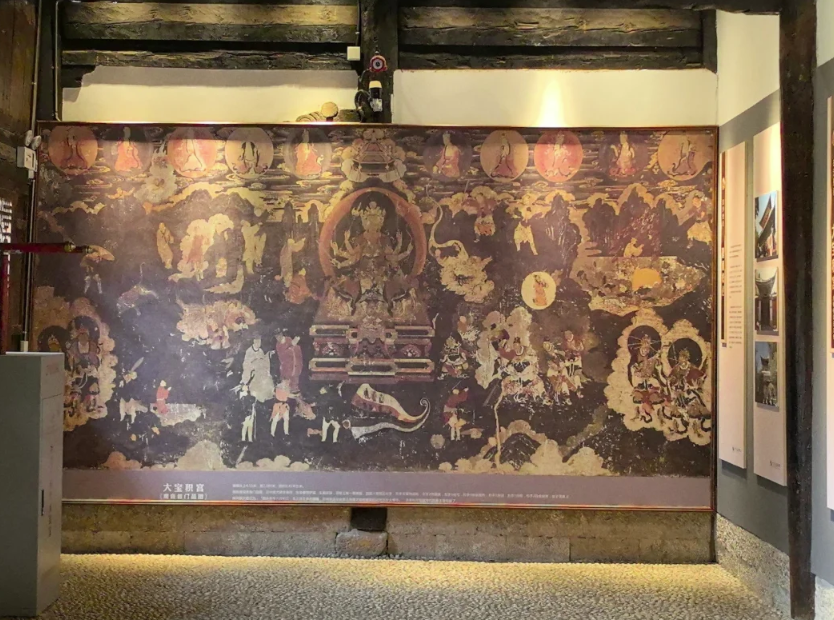
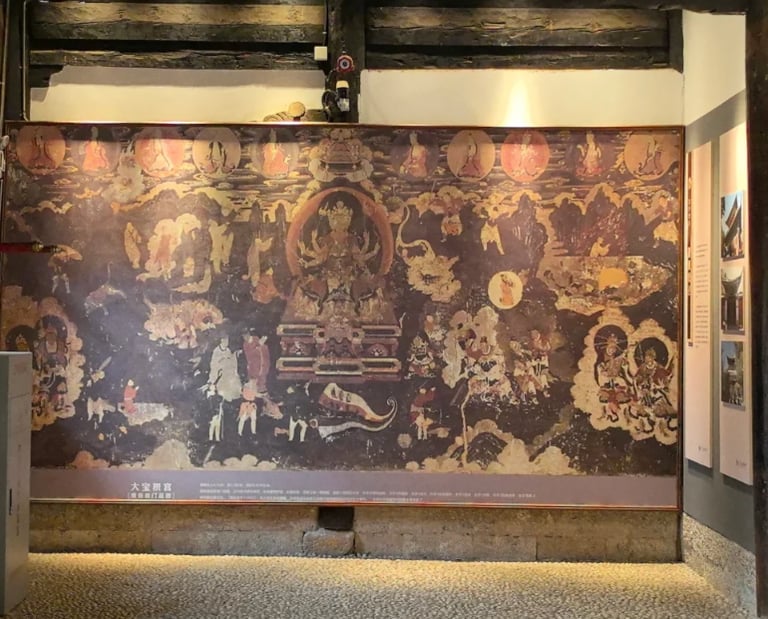
Baisha Frescoes
The Naxi Pearl of Ancient Religious Art
Located in Baisha Ancient Town about 10 km north of Lijiang, the Baisha Frescoes are one of Yunnan's most treasured cultural landmarks, often hailed as the "Naxi Pearl" (纳西明珠). Painted between the Ming and Qing dynasties over a span of more than 300 years, these murals are a unique blend of artistic styles from Han, Tibetan, Naxi, and Bai cultures, harmoniously weaving together Tibetan Buddhism, Taoism, Confucianism, and the Naxi Dongba religion. Today, 55 well-preserved fresco groups can be admired in ancient structures such as Dabaoji Palace and Liuli Hall, featuring vivid depictions of religious tales, saints, and mythological creatures. As a key national cultural heritage site, the Baisha Frescoes serve as an invaluable resource for studying China's art and religious history
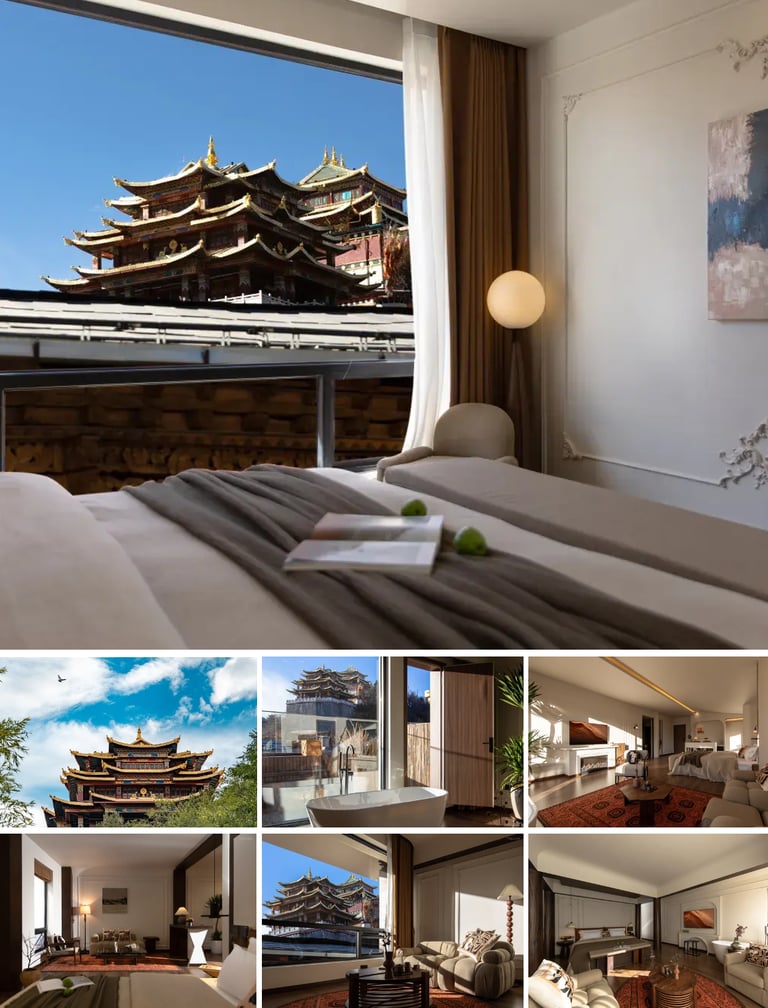
Yixin Moon Earthly HYGGE|Space Art Hotel
(Dukezong Ancient City Prayer Wheel Store)
Deep in China’s mountainous southwestern province of Yunnan—a land of misty forests, ethnic diversity, and unparalleled biodiversity—lies a hot pot like no other. The Yunnan Tripe & Wild Mushroom Hot Pot is not merely a meal; it is an edible journey through the region’s rain-soaked woodlands and highland pastures. Combining the rugged chew of beef or pork tripe with the ephemeral, earthy riches of wild fungi, this dish captures the very soul of Yunnanese cuisine: fresh, foraged, and fiercely flavorful.
The star of the pot is the mushrooms. Depending on the season, the broth may feature porcini (bolete), fragrant matsutake, golden chanterelles, or the delicate, wood-ear-like goat’s ear fungus. These are no ordinary supermarket fungi—they are hand-picked from Yunnan’s ancient forests, prized for their layered umami and subtle floral notes. Alongside them, the tripe (carefully cleaned and thinly sliced) adds a satisfyingly springy, slightly crisp texture that contrasts beautifully with the melting tenderness of the mushrooms.
The broth itself is a masterwork of subtle complexity. Simmered with chicken or pork bones, ginger, garlic, and a bundle of local herbs (including lemongrass and sawtooth coriander), it is light yet deeply savory. As the pot bubbles at the table—a communal centerpiece—the mushrooms slowly release their essences, transforming the clear broth into a dark, rich elixir redolent of damp earth and wild herbs.
No bowl of Yunnan tripe and mushroom hot pot is complete without its signature dipping sauce. Diners mix chili oil, fresh cilantro, minced garlic, and a spoonful of fermented bean curd (furu) into a pungent, salty, and spicy condiment that cuts through the richness and lifts every bite.
Perfect for cool, misty evenings in the highlands, this hot pot is more than comfort food—it is a celebration of Yunnan’s natural bounty and a testament to the region’s culinary philosophy: honor the ingredients, share the fire, and savor the wild. Whether enjoyed in a rustic mountain lodge or a bustling Kunming night market, it promises a feast that warms both body and soul.
URL LINK: https://www.trip.com/w/auREfQeTzU2
DAY 5 / Full-day sightseeing in Shangri-La
The eastern Tibetan Plateau, Shangri-La is a realm of spiritual serenity and alpine grandeur. At an elevation of over 3,000 meters, this mythical landscape transitions from dramatic mountain gorges to sweeping, high-altitude grasslands dotted with grazing yaks.
It is a sanctuary of profound cultural learning, dominated by the majestic Songzanlin Monastery—often called the "Little Potala Palace"—where the vibrant traditions of Tibetan Buddhism come to life. For the active explorer, Shangri-La offers a sublime backdrop for rugged high-altitude hiking and breathtaking cycling along remote, winding backroads, where every turn reveals snow-capped peaks, pristine alpine lakes, and an authentic glimpse into the soul of the Himalayas.
Saddle-View Highlights
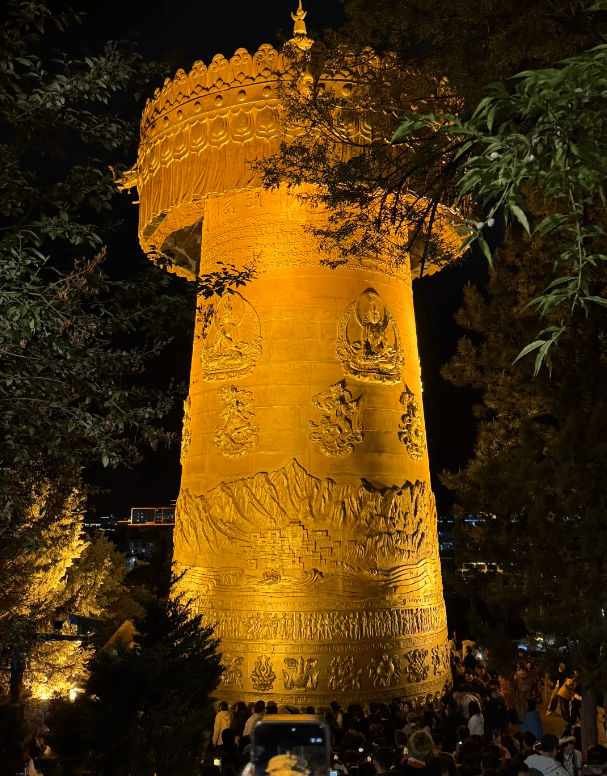
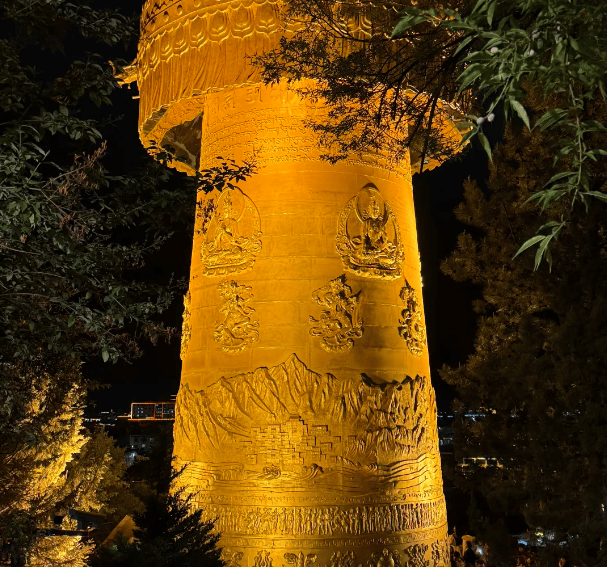
Guishan Prayer Wheel
– The World's Largest Golden Prayer Wheel in Shangri-La
Perched atop Turtle Hill within Dukezong Ancient Town in Shangri-La, the giant prayer wheel at Guishan Park is one of the largest and heaviest prayer wheels in the world, once listed in the Guinness World Records. Standing approximately 21 meters (nearly five stories) tall and weighing an astonishing 60 tons, this magnificent structure was built in 2002 to commemorate the renaming of Zhongdian County to Shangri-La City. Its cylinder is crafted from pure copper and plated with gold, featuring high-relief carvings of the Four Great Bodhisattvas—Manjushri, Samantabhadra, Avalokiteshvara, and Ksitigarbha—on the upper section, while the lower section is adorned with the Eight Auspicious Symbols of Buddhism.
Dukezong Ancient Town - The Moonlight City of Shangri-La
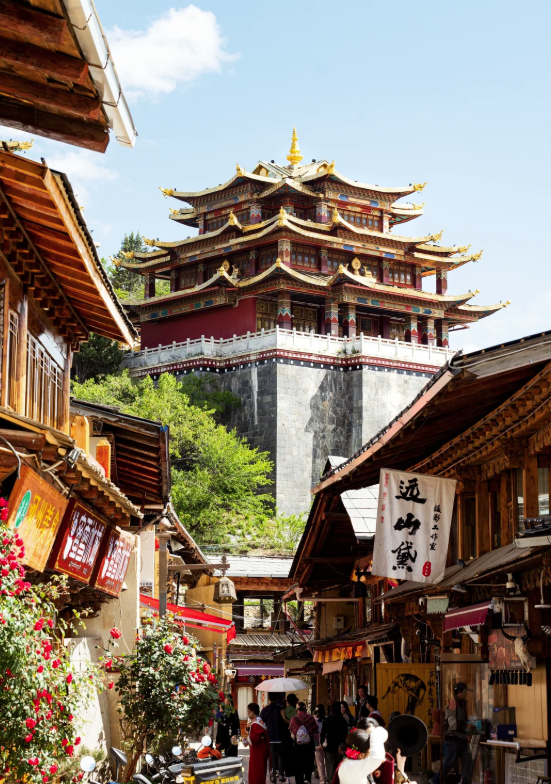
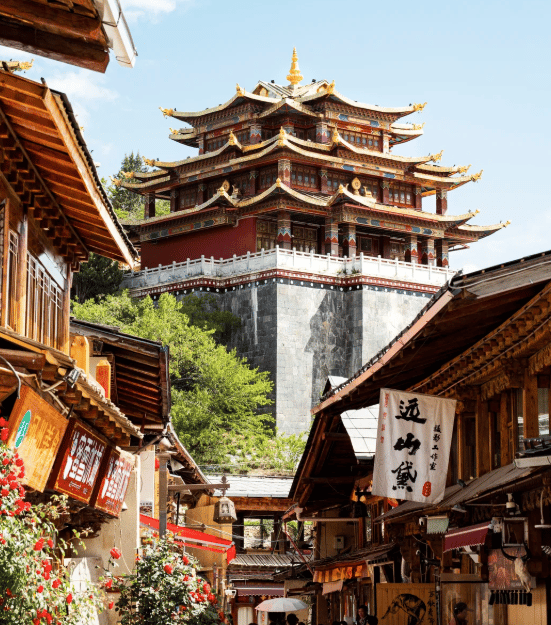
Dukezong Ancient Town, located in Shangri-La, Yunnan, is a Tibetan town with a history of over 1,300 years. Its name in Tibetan means "Moonlight City" and "castle built on stone". Once a vital hub on the ancient Tea Horse Road, it served as a major trading and cultural center between Yunnan, Sichuan, and Tibet. Today, Dukezong is celebrated as China's best-preserved and largest Tibetan residential complex. Though severely damaged by a fire in 2014, the town was meticulously rebuilt following the principle of "repairing the old as it was" and reopened in 2016. Visitors can now explore its atmospheric alleys, see the world's largest prayer wheel atop Turtle Hill, and experience the vibrant mix of Tibetan culture and history.
Ganden Sumtseling Monastery
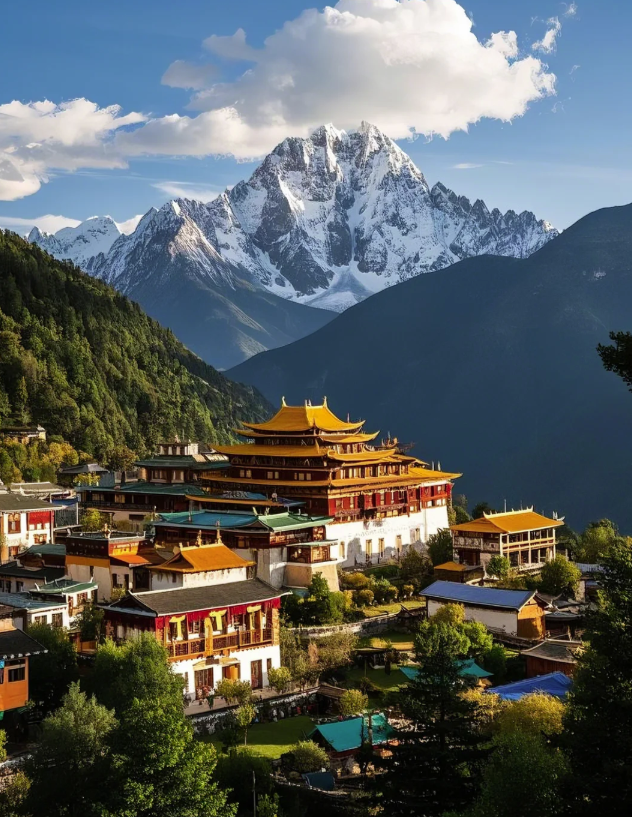
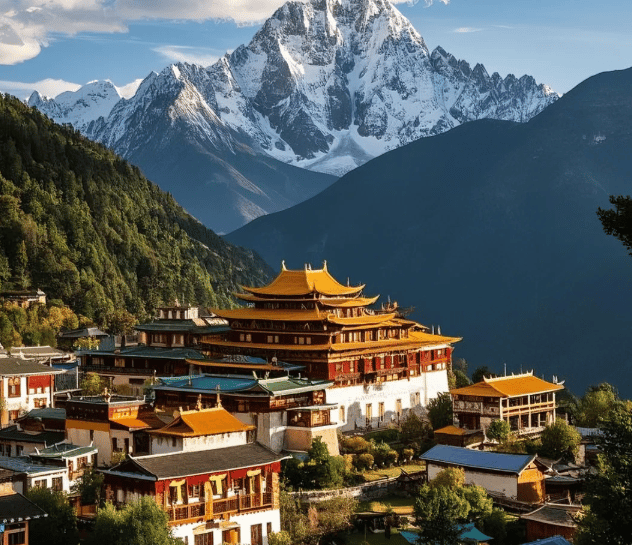
Ganden Sumtseling Monastery (also known as Songzanlin Lamasery or Guihua Monastery) is the largest Tibetan Buddhist monastery in Yunnan Province and one of the most important Gelug (Yellow Hat) sect centers in the Sichuan-Yunnan region, widely revered as the "Little Potala Palace". Construction began in 1679 and was completed in 1681 under the order of the Fifth Dalai Lama, who personally bestowed the monastery's name. Built against Foping Mountain about 5 kilometers north of Shangri-La city center, the monastery sprawls across the hillside like an ancient castle town, featuring grand golden-roofed main halls, over 700 resident monks' quarters, and exquisite Tibetan Buddhist murals and statues.
Napahai Lakeside Road – - Shangri-La's Scenic "Water Highway"
Napahai Lakeside Road is a breathtaking scenic route encircling Napahai Lake in Shangri-La, Yunnan—about 8 km from the city center and once listed among the world's most scenic roads. Stretching roughly 40 km in total, this beautifully paved, winding road offers ever-changing panoramic views of lush grasslands, mirror-like lakes, highland wetlands, snow-capped peaks and free-roaming yaks. From June to September, seasonal flooding transforms a section of the road into the famous "water highway", where vehicles drive through shallow water reflecting the blue sky and white clouds. Entry is free, making it a paradise for drivers, cyclists, and photographers alike.
Yixin Moon Earthly HYGGE|Space Art Hotel
(Dukezong Ancient City Prayer Wheel Store)
Deep in China’s mountainous southwestern province of Yunnan—a land of misty forests, ethnic diversity, and unparalleled biodiversity—lies a hot pot like no other. The Yunnan Tripe & Wild Mushroom Hot Pot is not merely a meal; it is an edible journey through the region’s rain-soaked woodlands and highland pastures. Combining the rugged chew of beef or pork tripe with the ephemeral, earthy riches of wild fungi, this dish captures the very soul of Yunnanese cuisine: fresh, foraged, and fiercely flavorful.
The star of the pot is the mushrooms. Depending on the season, the broth may feature porcini (bolete), fragrant matsutake, golden chanterelles, or the delicate, wood-ear-like goat’s ear fungus. These are no ordinary supermarket fungi—they are hand-picked from Yunnan’s ancient forests, prized for their layered umami and subtle floral notes. Alongside them, the tripe (carefully cleaned and thinly sliced) adds a satisfyingly springy, slightly crisp texture that contrasts beautifully with the melting tenderness of the mushrooms.
The broth itself is a masterwork of subtle complexity. Simmered with chicken or pork bones, ginger, garlic, and a bundle of local herbs (including lemongrass and sawtooth coriander), it is light yet deeply savory. As the pot bubbles at the table—a communal centerpiece—the mushrooms slowly release their essences, transforming the clear broth into a dark, rich elixir redolent of damp earth and wild herbs.
No bowl of Yunnan tripe and mushroom hot pot is complete without its signature dipping sauce. Diners mix chili oil, fresh cilantro, minced garlic, and a spoonful of fermented bean curd (furu) into a pungent, salty, and spicy condiment that cuts through the richness and lifts every bite.
Perfect for cool, misty evenings in the highlands, this hot pot is more than comfort food—it is a celebration of Yunnan’s natural bounty and a testament to the region’s culinary philosophy: honor the ingredients, share the fire, and savor the wild. Whether enjoyed in a rustic mountain lodge or a bustling Kunming night market, it promises a feast that warms both body and soul.
URL LINK: https://www.trip.com/w/auREfQeTzU2
Special experience / culture events

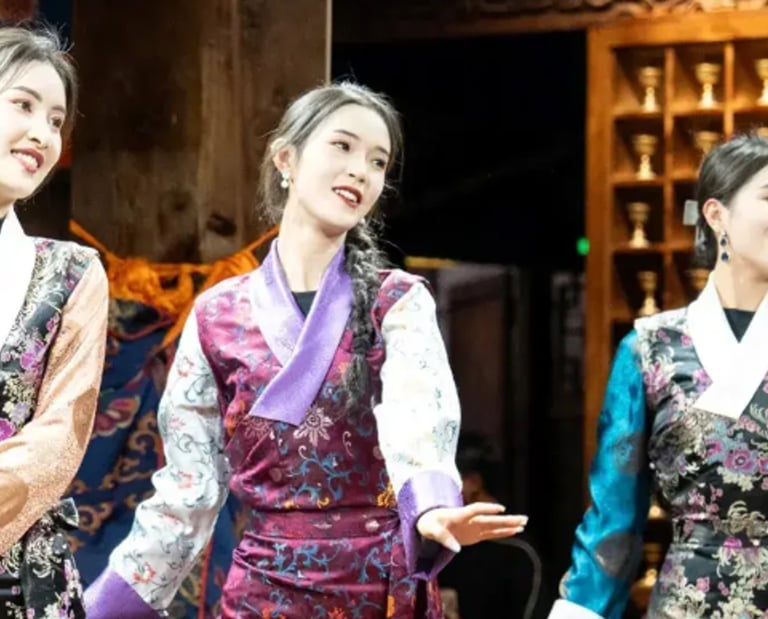
Zhaya Tusi Manor – An Immersive Tibetan Cultural Feast in Shangri-La
Nestled at No. 157 Kangzhu Avenue in Shangri-La, the Zhaya Tusi Manor (扎雅土司庄园) is the largest Tusi manor in the region. It is a faithful re-creation of the residence of Lord Duoji from the acclaimed TV series Shangri-La, offering a vivid glimpse into the life of ancient Tibetan aristocracy. The sprawling 5,000 square-meter complex features a traditional Tibetan main building, a culture exhibition hall with over a hundred Tusi-era artifacts, and a sacred scripture hall. The signature evening Tusi Feast is a journey into Tibetan culture, featuring a family-style yak meat hotpot, unlimited traditional dishes, captivating folk dances, and an interactive bonfire party under the stars. This experience is a feast for all senses.
Url Link: https://hk.trip.com/things-to-do/detail/98552286?locale=en-US
What's included
The following services are part of your standard package to ensure comfort and technical support throughout the 5-night journey:
Support & Logistics
Dedicated Support Van: A vehicle follows the group every step of the way to provide mechanical support, luggage transport, and a "sag wagon" option for tired riders.
Professional Driver: A dedicated driver for the support vehicle.
English-Speaking Professional Cycling Crew: Every tour is supported by a dedicated driver and expert Cycling Guides maintained at a 1:6 ratio for maximum safety and personalized attention. Our guides are multi-talented professionals: they lead the navigation, provide advanced mechanical support (Ride, Tech, Repair), and are fully trained in emergency first aid. They also act as your personal on-road content creators, capturing high-quality photos and videos throughout your journey.
Specialist Cultural Guides: Depending on the itinerary, we provide professional English-speaking cultural guides for city and heritage tours. These experts offer deep insights into local history and traditions, providing a rich, educational narrative that complements your physical adventure.
Accommodation & Meals
Luxury Accommodation: 5 nights of stay based on two guests per hotel room.
Daily Breakfast: Morning meals are included at each hotel.
Media Services
Professional Content Team: Comprehensive tour photography and video services.
DJI Drone Service: Aerial drone footage of the group cycling through the scenic landscapes.
Safety & Insurance
High-Limit Travel Insurance: Every participant is provided with 1,000,000 RMB accidental travel insurance to cover medical emergencies and accidental injuries during the tour.
Entrance Fees: Tickets for travel hotspots, cultural shows (e.g., Impression Liu Sanjie), and scenic area shuttles are included.
Not Included in the Tour
Guests should budget for the following additional costs and administrative requirements:
Lunch & Dinner: Daily meals (other than breakfast) are not included.
Bicycle Rentals
MTB, Carbon Road Bike, E-bike ( Please let us know your size and peddle requirements ahead of time. )
Documentation & Personal Travel
Visa Processing: Guests must process their Chinese visas independently.
Additional Travel Insurance: While 1M RMB accidental insurance is provided, guests must obtain their own comprehensive Travel Insurance (covering trip cancellation or illness) before submitting visa documents.
Single Occupancy: Single-room requests are subject to availability and will incur an additional fee.
Elite Support Vehicle & Logistics Infrastructure
A fleet of Professional Drivers (all highly experienced mountain drivers and active cycling enthusiasts) will man our dedicated support vans, shadowing the group every kilometer of the way.
Every vehicle is outfitted with a Full Logistics & Comfort Checklist (Items 1–19):
1.Roof Bike Carrier: Premium Thule rack system securely holding up to 6 bicycles per vehicle.
2.Side Awning Tent: Retractable vehicle canopy providing immediate outdoor shade and rest space.
3.Onboard Mini Refrigerator: Portable car fridge keeping drinks cold and fresh food chilled.
4. Cooking Kit: Complete outdoor cookware and portable gas stoves for field meal preparation.
5.Portable Power Station: High-capacity mobile power supply for all field electronics and appliances.
6. Pressurized Mobile Shower Set: Pressure-driven portable system for outdoor rinsing and bathing.
7.Detachable Changing Tent: Independent pop-up privacy tent for roadside clothes changes.
8.Camping Furniture: Foldable premium outdoor dining tables and matching camping chairs.
9.First Aid Kit: Standard comprehensive emergency medical and trauma treatment kit.
10.Cycling Energy Supplements: On-tour fuel supply including sports energy drinks and electrolyte powders.
10.Fresh Food Supply: Fresh bananas, assorted seasonal fruits, bread, and daily drinking water.
11.Beverage Reserve: Coca-Cola, craft beers, and red wine for post-ride relaxation.
12. Full Bicycle Repair Toolkit: Professional, portable bike-shop toolsets stationed in every van.
13.Certified Driver Team: Drivers possess over 10 years of experience navigating high-altitude and rugged terrain.
14. Professional Bike Tech Training: Every driver has completed formal mechanical bicycle repair courses.
15. Driver Cycling Hobby: Drivers are active cyclists, understanding rider needs intuitively.
16. Off-Road Ready Tires: Vehicles modified with rugged, off-road tires for mountain gravel and complex roads.
17. Emergency Spare Parts: Onboard reserve of common components for quick, roadside mechanical fixes.
18. Daily Camping Consumables: Full stock of cleaning supplies and daily necessities for multi-day outdoor comfort.


Cancellation Policy
Cancellation fees are calculated based on the date we receive your written cancellation request, in accordance with the following schedule:
90 days or more prior to scheduled departure: 5% of the total cost per person.
45 days or more prior to scheduled departure: 15% of the total cost per person.
15 to 44 days prior to scheduled departure: 30% of the total cost per person.
7 to 14 days prior to scheduled departure: 50% of the total cost per person.
6 days or less prior to scheduled departure: 100% of the total cost per person.
Important Notes:
Third-Party Fees: Any additional cancellation fees imposed by external service providers (including, but not limited to, banks, payment platforms, airlines, cruise lines, hotels, or railway companies) will be deducted from your final refund amount.
Traveler Changes: Changing the name of a traveler on an existing booking is considered a cancellation and is subject to the standard policy and fees outlined above.
Unused Services: Once a tour has commenced, we are unable to provide refunds for any unused services (including hotels, transportation, meals, or admission fees) resulting from late arrivals, early departures, or missed days on the tour.
Promotional Offers: Special terms and conditions may apply to promotional bookings.
Premium Fleet Rentals
Top-tier E-bikes, Road, and MTBs maintained to western standards, available with pre-loaded GPS routes for independent exploration.
MTB


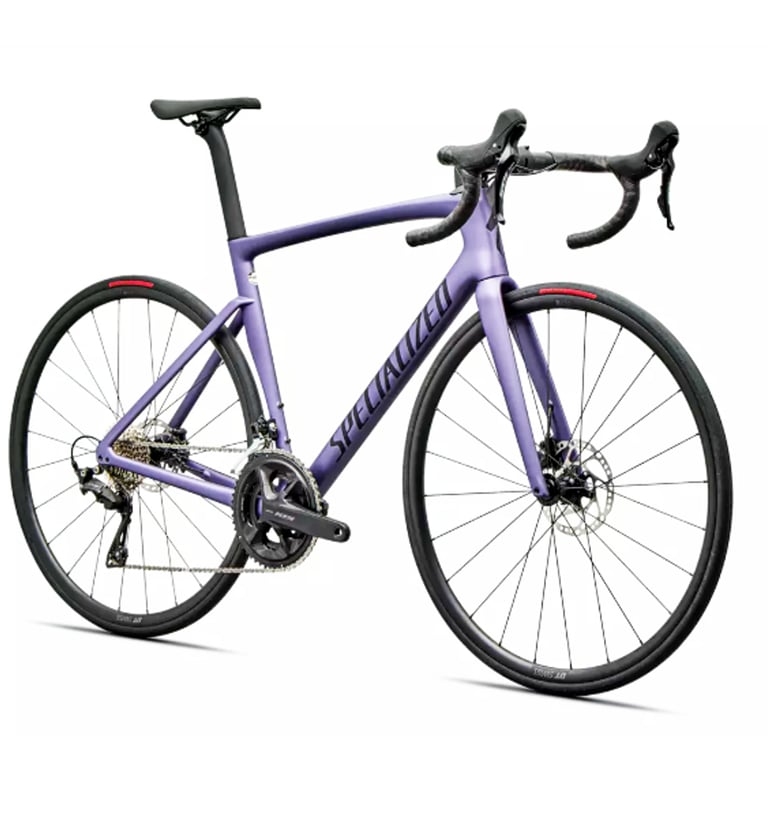


"Ride China’s rugged terrain with confidence. Our premium fleet features top international brands like Specialized, Cannondale, and Trek. Professionally tuned for performance, we stock all sizes (XS to XL) to ensure the perfect fit. Experience reliable, high-end gear designed for technical single-track and scenic off-road adventures."
ROAD
"Experience pure speed on our elite fleet of full-carbon road bikes. We feature legendary brands including Colnago, Specialized, Cannondale, and Trek. We guarantee the perfect match for your geometry with all sizes available. Light, stiff, and professionally fitted to your specs for the ultimate riding experience."
E-BIKE
"Eliminate range anxiety with our expedition-ready E-bikes, capable of an impressive 170 KM on a single charge. Designed for long-distance touring, every bike comes fully equipped with integrated front and rear safety lights and spacious travel bags for your gear. Explore China further, faster, and effortlessly."
Special Experience guided bike tour

Beijing
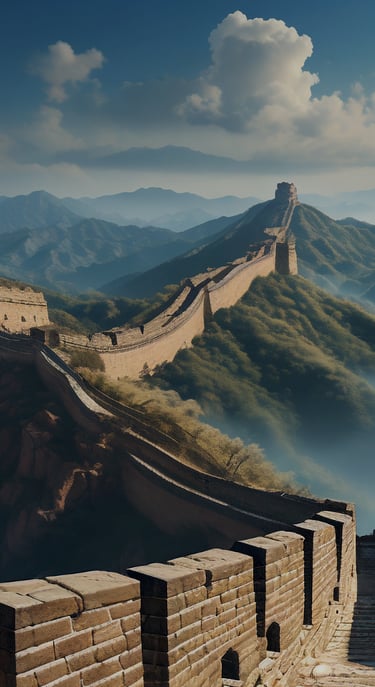
For over 3,000 years, Beijing has been the beating heart of Chinese civilization. It is a city of staggering contrasts: immense imperial palaces—the Forbidden City—sit beside intimate hutong alleyways where the echo of bicycle bells lingers. The Great Wall snakes along the northern mountains like a sleeping dragon, while futuristic skyscrapers pierce the smog-free skies of the CBD. As you pedal through this living museum, you feel the weight of history under your wheels: emperors, revolutionaries, dreamers. Yet the city never rests. From sizzling Peking duck stalls to hidden courtyard teahouses, Beijing thrums with the vibrant pulse of a modern superpower—ancient, bold, and utterly unforgettable.
"Experience China’s breathtaking landscapes and ancient culture from the saddle. Safe, supported, and authentic adventures away from the crowds."
Yangshuo
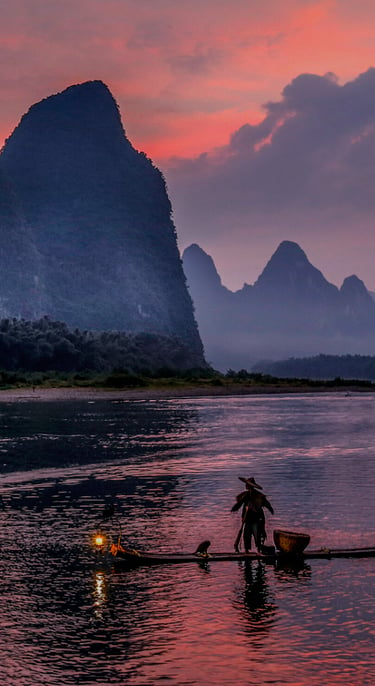
Guilin, in China's Guangxi region, is famous for having "the finest scenery under heaven." The city is dominated by spectacular karst topography—thousands of unique limestone peaks rising steeply from the ground like ancient sentinels. The crystal-clear Li River threads through this surreal landscape, its emerald waters mirroring the jagged hills. Key attractions include the iconic Elephant Trunk Hill, a rock formation resembling a giant elephant drinking from the river, and the breathtaking cruise to Yangshuo, where every bend reveals another postcard-perfect view. Guilin provides a mystical, tranquil natural beauty often depicted in classic Chinese ink paintings—a place where mist drapes over peaks and time seems to stand still.
ChengDu
Tucked away within Liangtai Gou near Chengdu, Sunshine Lover's Valley lives up to its romantic name. Bathed in abundant sunlight even as mist lingers elsewhere, this hidden gem offers pristine forests, gurgling streams, and meadows dotted with wildflowers. Towering snow-capped peaks frame the horizon, while lush greenery embraces every winding path. The gentle sound of flowing water accompanies your every step, creating an intimate atmosphere perfect for couples seeking solitude or nature lovers craving tranquility. Whether you're sharing a quiet picnic by the creek or simply holding hands beneath the dappled sunlight, this valley feels like a secret whispered between the mountains—a place where love and nature bloom together in perfect harmony.
4 day 3 night tour
7 day 6 night tour
4 day 3 night tour
Shangri-la
6 day 5 night tour
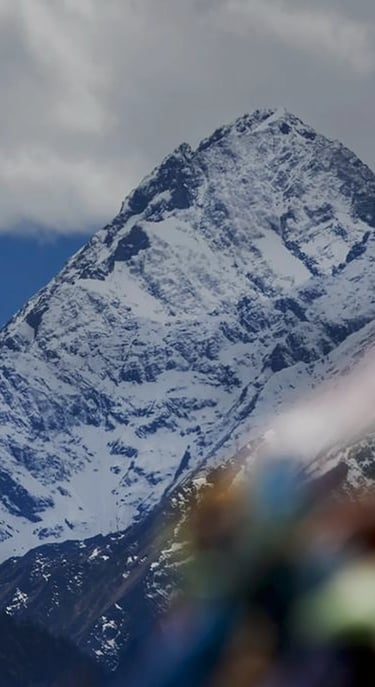
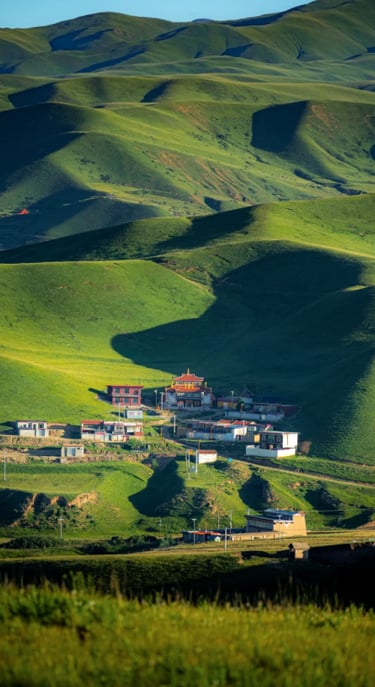
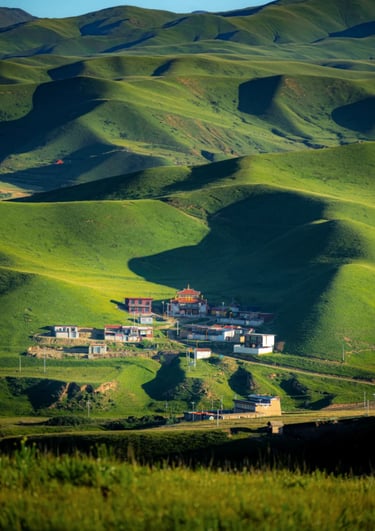
Where snow-capped peaks pierce the heavens, Shangri-La offers an otherworldly escape into Yunnan’s wild frontier. Wander ancient cobblestone streets in Dukezong, one of Tibet’s best-preserved old towns. Hear rhythmic chants echoing within Songzanlin Monastery, the “Little Potala Palace,” where prayer wheels spin beneath golden rooftops. Lose yourself in pristine alpine valleys—Pudacuo’s crystal lakes and flower-strewn meadows. Here, ancient Tibetan myths breathe and untamed nature truly thrives. Wild yaks graze beneath glacier-carved ridges; prayer flags flutter in crisp mountain air. Whether seeking spiritual peace or high-altitude adventure, Shangri-La calls you home to a land where legend and landscape become one.
Sitemap
Phone
cyclequestchina@gmail.com
+86.19144203310
© 2003 - 2026 CycleQuest China All right reserved !