 Written byCycleQuest Editorial Team
Beijing has closed its skies. From 15 November 2026 it is illegal to fly a drone anywhere in the municipality, illegal to keep one there, and illegal to bring one in — and that last prohibition has already been in force since 1 May 2026. For a visiting cyclist this is not a “check the app before you take off” rule. It is a “leave it at home” rule, and it applies from the moment your train or plane crosses the city boundary.
This guide sets out what the regulations actually say, what happens if you arrive with a drone anyway, the transit trap that catches people connecting through Beijing Capital and Daxing, and where in China you can still get aerial footage of your ride. We checked every point below against the published Chinese text on 14 September 2026; the sources are listed at the end so you can verify them yourself.
Before you ride
Quick answers
Can I bring my drone to Beijing?
No. Carrying or transporting a drone into Beijing has been prohibited since 1 May 2026, and from 15 November 2026 simply having one inside the city is prohibited too.
Does my sub-250 g Mini count?
Yes. Beijing's rules set no weight threshold, so a DJI Mini or Neo is treated exactly like a full-size aircraft.
What about my 360 or action camera?
Unaffected. The ban covers unmanned aircraft. Handheld cameras, gimbals and helmet mounts are fine, and we still rent the DJI Osmo 360 in Beijing.
Where can I still fly in China?
Outside Beijing, in permitted airspace and with the correct registration. On our tours in Dali, Yangshuo, Guilin, Chengdu and Shangri-La, aerial coverage is flown by our own licensed local crew.
The short answer: do not bring it
Most travel advice about Chinese drone rules is about where you may fly. Beijing has moved past that question. The city now regulates possession and transport, not just flight, which means the usual workarounds do not apply. You cannot keep the drone packed and fly it in the next city. You cannot leave it in a hotel safe in Sanlitun while you ride the Great Wall. You cannot hand it to a guide for safekeeping.
If aerial footage matters to your trip, plan to shoot it somewhere other than Beijing.
What the rules say
Already in force since 1 May 2026
The Beijing Municipal Regulations on the Administration of Unmanned Aircraft (《北京市无人驾驶航空器管理规定》) took effect on 1 May 2026 and did three things at once:
- The whole municipality became controlled airspace. Every outdoor flight, in any of Beijing’s 16 districts, requires prior approval.
- Sales and rentals stopped. Shops and online platforms may not sell or rent drones to people or organisations in Beijing.
- You may not bring one in. Transporting or carrying a drone, or its core components, into Beijing is prohibited — by air, high-speed rail, inter-provincial coach, private car or courier.
That third rule is the one that catches travellers, because it bites at the city boundary rather than at the moment you press take-off.
What changes on 15 November 2026
On 13 September 2026 the Standing Committee of the Beijing Municipal People’s Congress passed a revised version of the regulations, effective 15 November 2026. Article 3 states four prohibitions in a single breath:
- The entire administrative area of Beijing is controlled airspace for unmanned aircraft.
- Flying an unmanned aircraft in the municipality is prohibited.
- Holding or storing an unmanned aircraft or its core components in the municipality is prohibited.
- Transporting or carrying an unmanned aircraft or its core components into the municipality is prohibited.
Point 3 is the new one, and it is why “I will just keep it in the bag” stops being an answer. A separate catalogue of what counts as a “core component” (核心部件) is being issued by the municipal industry and information technology authority, so treat airframes, batteries and controllers as all being in scope.
Separately, the Capital No-Fly Zone (首都禁飞区) comes into use on 20 September 2026. It restricts flight activity other than scheduled civil aviation and emergency response, and does not affect you boarding an ordinary passenger flight to Beijing.
Article 6 leaves one narrow door open. Where there is a genuine need to buy, transport or store a drone for counter-terrorism and public security work, disaster relief or major public events; for teaching, research and production by schools, research institutions and manufacturers; or for agriculture and forestry, the municipal public security authority may grant a case-by-case “special safeguard” after a safety assessment. Travel photography, wedding video, commercial filming and hobby flying are not on that list — and neither is a licensed local operator working for a tour company. Nobody is flying legally over Beijing for a holiday video.
The transit trap
The prohibition applies to Beijing’s administrative area, which is where otherwise careful travellers come unstuck:
- Connecting through Beijing Capital (PEK) or Daxing (PKX) on your way to Yunnan or Guangxi still counts as bringing the drone into Beijing.
- High-speed rail routed through Beijing counts, and station security screening is where drones are most often found.
- Driving in counts, including a support vehicle carrying a rider’s gear.
What it costs if you get it wrong
Enforcement sits with the public security authorities. Article 8 of the revised regulations opens with the flight penalty:
Where the flight prohibition is violated, the public security organ shall order the flight to stop, confiscate the unmanned aircraft used in the unlawful flight, and impose a fine of not less than ¥1,000 and not more than ¥10,000.
For an individual caught carrying, transporting or holding a drone rather than flying one, the regulation provides for an order to correct and, in serious cases, confiscation of the aircraft and its core components together with a fine in the ¥500–5,000 band. Organisations and e-commerce platforms face materially higher figures.
Focus on the confiscation rather than the fine. A DJI Air 3S pulled out of a bag at a railway station X-ray is not coming back, and the fine is the cheaper half of the loss.
What counts as a drone — and what does not
| Affected by the ban | Not affected |
|---|---|
| Every drone regardless of weight, including the DJI Mini series and DJI Neo | Action cameras (GoPro, DJI Osmo Action) |
| FPV quads and fixed-wing model aircraft | 360 cameras (Insta360, DJI Osmo 360) |
| Core components: airframes, batteries, controllers | Handheld gimbals, helmet and bar mounts |
| A packed drone in checked luggage, a hotel safe or a support van | Mirrorless and compact cameras, bike computers |
Beijing does not copy the national practice of treating micro drones more leniently. Elsewhere in China the “micro” class under 250 g gets meaningful exemptions from flight applications; inside Beijing that distinction does not exist.
This is also why we still rent the DJI Osmo 360 at our Beijing pick-up points. It is a camera, not an aircraft — and it is genuinely good at what most riders actually want, which is usable footage from the bike rather than from the sky.
Already in Beijing with a drone?
If you are living in Beijing, or you are mid-trip and already inside the city with a drone, the municipality has opened three disposal channels that run until the ban takes effect:
- Buy-back at government-recognised companies — a subsidy of 30% of the buy-back price, capped at ¥3,000 per unit, from 12 September to 31 October 2026; then 15%, capped at ¥1,500, from 1 to 14 November.
- Scrapping at official recycling points — ¥200 per unit until 31 October, ¥100 from 1 to 14 November.
- Shipping it out by China Post EMS — postage waived between 12 September and 14 November 2026.
You may also carry it out of Beijing yourself, but it must be gone before 15 November. The subsidies apply to drones whose ownership has already been verified with the public security authorities, which in practice means residents rather than visitors. For a visitor, EMS to a friend or a hotel in your next city is the clean option.
Can you still fly elsewhere in China?
Yes — in the right airspace and with the right paperwork. But if you are visiting from abroad, read this national provision before you pack:
Foreign unmanned aircraft, or unmanned aircraft operated by foreign personnel, may not carry out surveying and mapping, radio parameter testing or similar flight activities within the territory of China.
Article 35, Interim Regulations on the Flight Management of Unmanned Aircraft (State Council and Central Military Commission Order No. 761, in force since 1 January 2024).
Alongside that, the national framework requires real-name registration of civil drones (Article 10), prohibits flight in controlled airspace without air traffic approval (Article 19), and exempts only micro, light and small drones flying inside designated suitable-to-fly airspace from filing a flight application (Article 31). Individual scenic areas then add their own bans — the Ideal State (Santorini) development on the west bank of Erhai Lake, on our Dali routes, is a well-known example.
None of this is legal advice, and the rules have moved twice in 2026 alone. Check the current position before you fly, and when the answer is unclear, do not fly.
What we changed on our own tours and rentals
We updated our operation before publishing this, so that what we sell matches what the law allows:
- Beijing rentals. The DJI Air 3S has been withdrawn from all twelve of our Beijing pick-up points. The DJI Osmo 360 camera is unaffected and still available there.
- Beijing tours. The 4-day Discover Beijing e-bike tour no longer includes drone filming. Your ride is covered by our content team from the road and the support van, and the itinerary’s included and not-included sections now say so explicitly.
- Everywhere else. Drone rental continues in Dali, Yangshuo, Guilin, Chengdu and Wuhan, and our multi-day tours in those regions still include aerial coverage flown by our own crew — which also keeps you clear of Article 35, because the person at the controls is local and licensed rather than a visitor.
If you have already booked a Beijing tour or rental that mentioned drone coverage, message us and we will confirm in writing what your trip now includes. Your price does not change; the aerial coverage is simply something nobody can legally deliver in Beijing.
Common questions
Is my sub-250 g Mini really included? Yes. Beijing’s regulations set no weight threshold. The lighter categories matter under the national rules, not inside Beijing.
What if I never take it out of the bag? From 15 November 2026 possession itself is prohibited, and before that date carrying it into the city already is. Neither window makes a packed drone legal.
Can I apply for a permit as a tourist or a professional filmmaker? No. The approval categories are public security and emergency response, teaching and research and production, and agriculture and forestry.
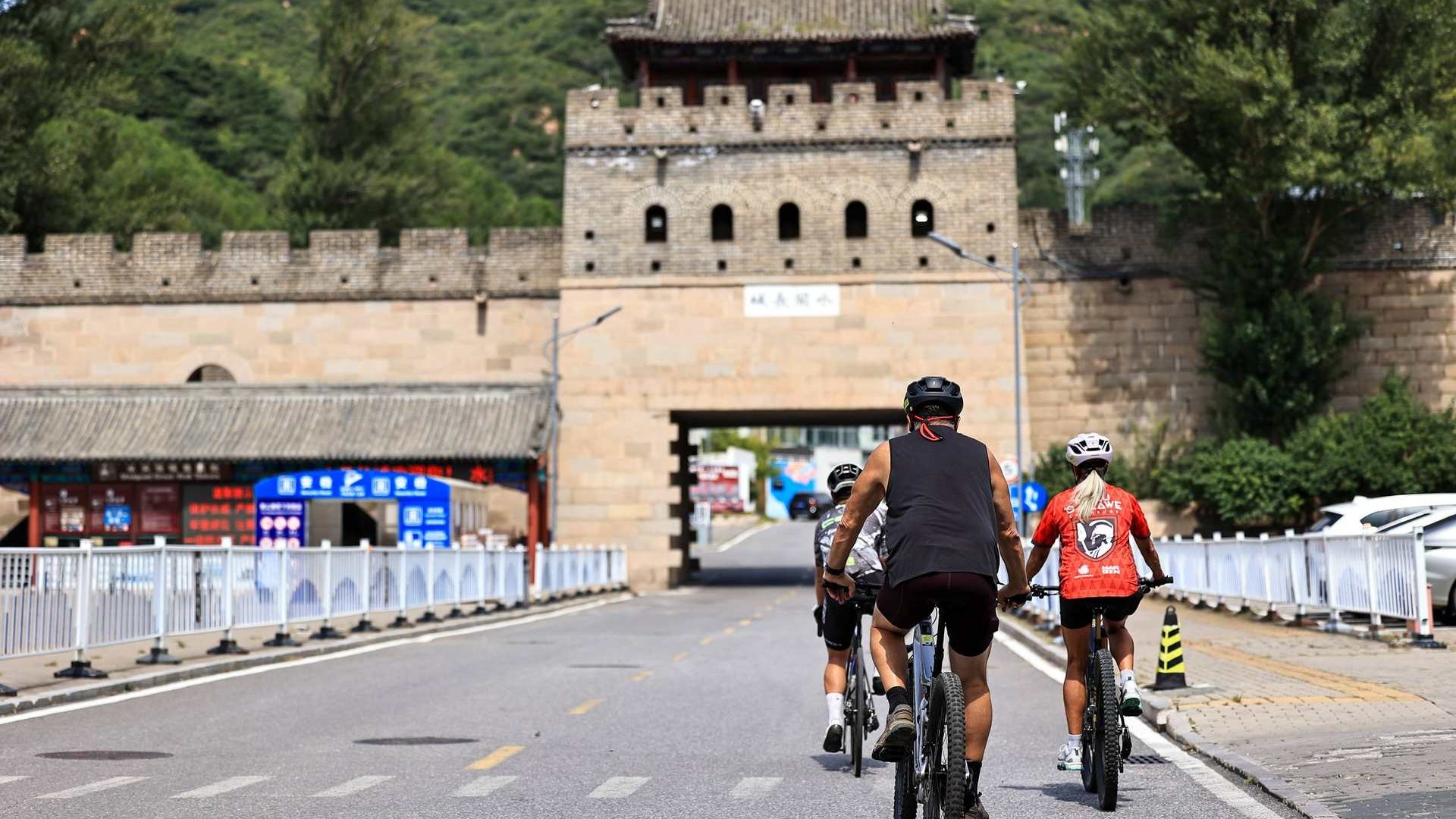
Does this cover the Great Wall sections outside the centre? Yes. Badaling, Mutianyu, Shuiguan, the Beijing side of Jinshanling and every other district sit inside Beijing’s administrative area.
Can I still get aerial footage of my China trip? Yes — outside Beijing, flown by a licensed local operator. That is how media coverage works on our Dali, Yangshuo, Guilin, Chengdu and Shangri-La trips.
Sources
Verified 14 September 2026. All primary sources are in Chinese.
- Full text of the revised 《北京市无人驾驶航空器管理规定》 — Standing Committee of the Beijing Municipal People’s Congress: bjrd.gov.cn
- Announcement of the 15 November effective date and the three disposal channels — Beijing Municipal Government: beijing.gov.cn
- Explanation of the rules that took effect on 1 May 2026 — Beijing Municipal People’s Congress: bjrd.gov.cn
- Public notice on carrying drones into Beijing — Beijing Municipal Government: beijing.gov.cn
- 《无人驾驶航空器飞行管理暂行条例》 — Civil Aviation Administration of China: caac.gov.cn